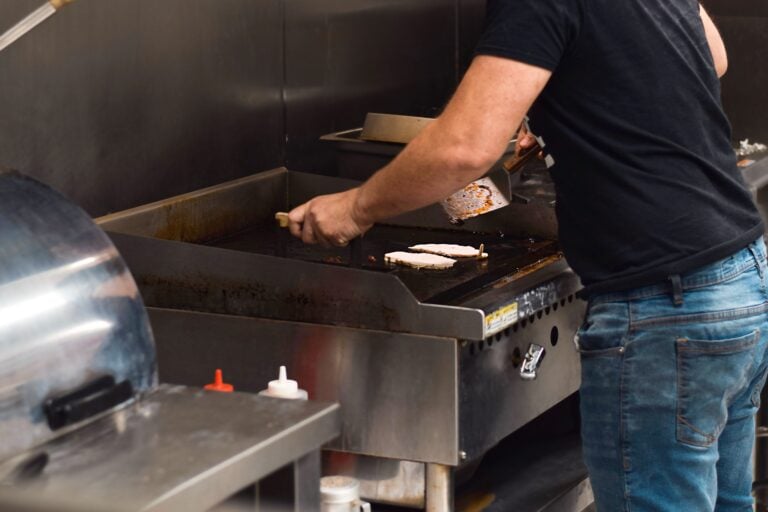
Your grill is the workhorse of the kitchen. It sees more action in a single dinner rush than most equipment sees all week, and it’s easy to assume that as long as it’s still firing up, it’s still doing its job. But an aging or underpowered grill doesn’t fail all at once — it fails slowly, in ways that quietly drain your bottom line. By the time you notice the problem, you may have already paid for a new grill several times over in wasted product, energy, and labor.
Here are five signs it’s time to stop repairing and start replacing.
1. Inconsistent Heat Across the Cooking Surface
Walk up to your grill and press your hand near different zones (carefully, of course) or watch how proteins cook across the surface. If you’re noticing hot spots that scorch food in seconds while other areas barely sear, your grill’s heating elements or burners are likely wearing out. Inconsistent heat forces cooks to compensate — shuffling food around, guessing at doneness, and babysitting the line instead of moving efficiently through orders.
This isn’t just an inconvenience. Uneven cooking leads to inconsistent plates, and inconsistent plates lead to sent-back orders, unhappy customers, and wasted product. In an industrial grilling environment where speed and repeatability are everything, a grill that can’t hold steady heat becomes a bottleneck for your entire kitchen.
2. Rising Energy Bills Without a Change in Volume
If your gas or electric bills are creeping up but your covers per night haven’t changed, your grill may be to blame. Older grills lose efficiency over time as components degrade, insulation breaks down, and burners struggle to maintain temperature. The result is a unit that has to work harder — and burn more fuel — just to produce the same output it did a year or two ago.
This kind of energy waste is easy to overlook because it happens gradually. But when you compare year-over-year utility costs against your sales volume, a widening gap is a clear signal that your equipment is no longer operating efficiently.
3. Frequent Repairs and Growing Downtime
Every piece of kitchen equipment needs occasional maintenance, but there’s a tipping point where repairs stop being routine and start being constant. If you’re calling a technician every few weeks, replacing parts that are becoming harder to source, or working around a grill that’s partially out of commission during service, you’re not just paying for repairs — you’re paying in lost revenue every time that grill isn’t fully operational.
Downtime during peak hours is especially costly. A grill that goes down during a Friday night rush doesn’t just delay orders; it can turn away customers who don’t want to wait, damaging both your revenue and your reputation. When repair costs and downtime start adding up faster than they used to, it’s usually cheaper in the long run to invest in a reliable replacement.
4. Your Menu Has Outgrown Your Equipment
Restaurants evolve. Maybe you’ve expanded your menu, increased your seating capacity, or started catering large events, and your grill simply wasn’t built for that kind of volume. A grill that was perfectly sized for your kitchen five years ago might now be a limiting factor, forcing your team to cook in smaller batches, extend ticket times, or turn down business during high-demand periods.
If your staff is constantly working around the limitations of your grill rather than the grill supporting your workflow, that’s a sign your equipment needs to scale with your business. Industrial grilling equipment designed for higher-volume kitchens can eliminate this bottleneck entirely, allowing your team to keep pace with demand instead of being held back by it.
5. Visible Wear That Affects Food Safety or Quality
Cracked grates, warped surfaces, rust, or damaged components aren’t just cosmetic issues — they can affect food safety and consistency. Grates that no longer sit flat can cause uneven cooking or difficulty cleaning properly, which raises sanitation concerns. Rust or corrosion near heating elements can also signal deeper structural problems that affect performance and safety.
If your grill is showing visible signs of wear that go beyond normal cosmetic aging, it’s worth having it inspected by a professional. In many cases, visible deterioration is a symptom of internal wear that’s already affecting performance, even if you haven’t connected the dots yet.
Making the Decision to Upgrade
No single sign always means it’s time to replace your grill, but when two or three of these issues show up together, the math usually favors upgrading. A new, well-built commercial grill isn’t just an expense; it’s an investment in consistency, efficiency, and the ability to keep up with your restaurant’s growth. The sooner you address a failing grill, the sooner you stop losing money to a piece of equipment that should be helping your kitchen run smoothly, not holding it back.