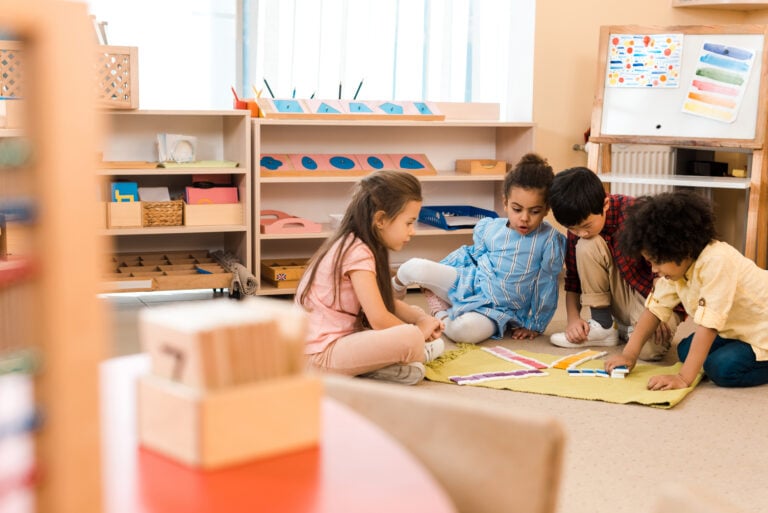
Watch a preschooler turn a cardboard box into a spaceship, and you’re witnessing something far more sophisticated than simple entertainment. That child is negotiating gravity, fuel shortages, and alien encounters—all while sitting in a living room. This is pretend play, and it’s one of the most powerful tools young children have for developing problem-solving skills that will serve them for years to come.
What Makes Pretend Play So Effective
Pretend play, sometimes called imaginative or symbolic play, happens whenever a child transforms an object, situation, or role into something else. A spoon becomes a microphone. A blanket fort becomes a castle under siege. These scenarios aren’t random—they require children to hold multiple ideas in their minds simultaneously, adapt when things don’t go as planned, and invent solutions on the spot.
This type of play matters so much in early education because it mirrors real-world thinking in a low-stakes environment. When a child decides that the dragon guarding their pretend castle needs to be outsmarted rather than fought, they’re practicing strategic thinking. When their playmate disagrees about the rules of the game, they’re learning to negotiate and compromise. These are problem-solving skills in action, disguised as fun.
Building Cognitive Flexibility Through Make-Believe
One of the most valuable outcomes of pretend play is cognitive flexibility—the ability to shift thinking and adapt to new information. During imaginative play, scenarios change constantly. The pretend restaurant runs out of pretend food. The superhero’s cape falls off mid-rescue. A preschooler engaged in this kind of play must adjust in real time, coming up with new plans without becoming derailed.
This flexibility doesn’t develop through instruction or worksheets. It develops through repeated practice in flexible, open-ended scenarios where there’s no single right answer. Pretend play offers exactly that kind of practice, over and over, in ways that feel joyful rather than stressful. Children who regularly engage in imaginative play tend to approach unexpected obstacles with curiosity instead of frustration, a mindset that pays dividends well beyond the preschool years.
Learning to Navigate Social Problems
Problem-solving isn’t only about logic puzzles or figuring out how things work—it’s also deeply social. Pretend play often involves other children, which means preschoolers must constantly solve interpersonal challenges. Who gets to be the doctor and who has to be the patient? What happens when one child wants to play house and another wants to play dinosaurs?
These moments of friction are actually rich learning opportunities. Children learn to advocate for their ideas, listen to others, and find middle ground. They practice reading facial expressions and body language to understand how their playmates are feeling. Over time, these social problem-solving skills become instinctive, helping children build stronger friendships and communicate more effectively in group settings, whether at school or at home.
Encouraging Creative and Divergent Thinking
Pretend play also nurtures divergent thinking, which is the ability to generate multiple solutions to a single problem. In imaginative scenarios, there’s rarely one “correct” way to proceed. If the pretend boat is sinking, a child might decide to patch the hole, call for pretend help, or simply declare that the boat can fly instead. All of these are valid solutions within the world of play.
This kind of open-ended thinking is essential for real-world problem-solving. Life rarely presents challenges with only one possible solution, and children who are comfortable generating multiple options are better equipped to handle ambiguity later on. Encouraging pretend play at home or in early education settings gives children regular practice in thinking beyond the obvious answer.
Simple Ways to Encourage Pretend Play
Parents and educators don’t need elaborate toys or curated play sets to support this kind of development. In fact, open-ended materials like blankets, boxes, kitchen utensils, and simple costumes often spark more creativity than highly detailed toys because they require children to fill in the gaps with their own imagination.
Setting aside unstructured time, resisting the urge to direct every scenario, and asking open-ended questions like “What happens next?” can go a long way. Adults can also join in occasionally, modeling how to work through pretend problems without taking over the narrative entirely.
A Foundation for Lifelong Thinking
Pretend play may look like simple fun, but it’s laying essential groundwork for problem-solving, flexibility, and social understanding. For preschoolers, every make-believe adventure is a low-pressure rehearsal for the challenges they’ll encounter throughout life. Supporting this kind of play isn’t just a nice addition to early education—it’s a meaningful investment in how children learn to think.