Most accounts of grace need two people: one who has done harm and one who chooses to extend patience anyway. Jeremy Bradley-Silverio Donato’s novel Three Days Grace makes room for a version that needs one.
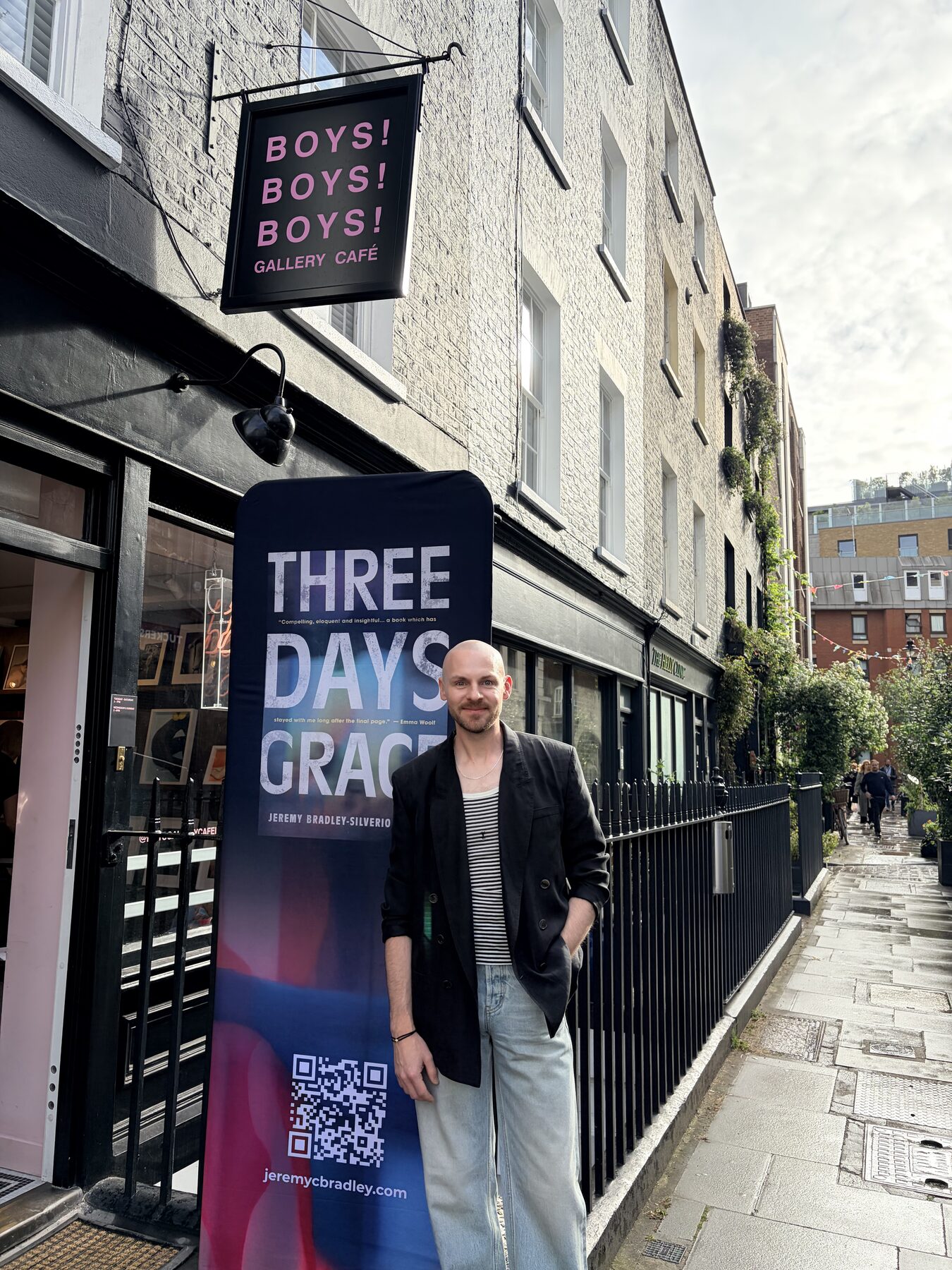
The book, published on 12 May 2026 by Indigo River Publishing and distributed by Simon & Schuster, follows five people in Paris over just 72 hours. Bradley-Silverio Donato, an American writer based in Paris, describes grace as a margin of time or understanding that someone receives without having earned it. He has also said it can mean allowing yourself to acknowledge a truth you have been avoiding.
“The title is really about the possibility of being given one more chance to tell the truth or to get things right.”
Telling yourself first
The line leaves open who does the giving and who receives the truth. In a family drama the obvious reading points outward: one character tells another what happened. The inward reading comes earlier. Before anyone can say a thing out loud, they have to stop arranging their own thoughts around it.
He describes how avoidance spreads past the family and into the self. “The things we refuse to confront can quietly shape our relationships, our families and even our understanding of ourselves,” he says.
The last clause is the one this kind of grace answers. A person can keep a subject closed for so long that the closure starts to feel like part of their character. Granting yourself grace, in his sense, means giving yourself permission to open it, without first demanding that you be blameless or sure of what you will find.
Permission without absolution
Inward grace is easy to confuse with self-forgiveness, and his definition keeps the two apart. Grace, as he uses the word, leaves consequences in place. Turned inward, that means a person can acknowledge something they did, or something done to them, without pretending it has stopped mattering. The permission is to look. The decision about what to do next comes later, and it is a separate act.
Inward grace has a practical consequence for the outward kind. A person cannot accept understanding for something they have not yet admitted, because the other person’s patience would land on a subject the receiver still refuses to name. The private permission makes the shared one usable, which is why the novel’s interest in grace from others leads back, sooner or later, to grace from within.
His other observations about people point the same way. He has said that people are seldom one thing, and that someone can make a terrible decision without being reducible to that decision. Applied to the self, that becomes a way of looking at your own history with open eyes. The worst thing you did, or the thing you most avoid admitting, belongs in the record and still falls short of the whole account.
Inside the hotel
The structure of the novel gives this idea a setting. Five people convene in a hotel, with a departure fixed at the end, and the death of Lynne’s ex-husband, the father of her son Nick, unsettles whatever terms they had made with the past. In a gathering like that, each person carries some account of events they have learned to live with. Outward grace in that room would mean one person making space for another. Inward grace comes first, in each person’s private decision about whether to keep looking away.
Bradley-Silverio Donato’s broader concern, across his fiction and his writing on organisations, is the moment people finally say the thing that has gone unsaid. Grace turned inward is the step before that: admitting the thing to yourself and deciding it can be said at all. It may be the harder of the two steps, since nobody else in the room can take it on your behalf.
Three Days Grace gives its characters a few days and a crowded room. The more private interval it describes has no fixed length, and each reader sets the deadline for their own.
Jeremy Bradley-Silverio Donato is an American novelist who lives in Paris. Three Days Grace is published by Indigo River Publishing and distributed by Simon & Schuster.
jeremycbradley.com · jeremycbradley.substack.com · @jeremycbradley