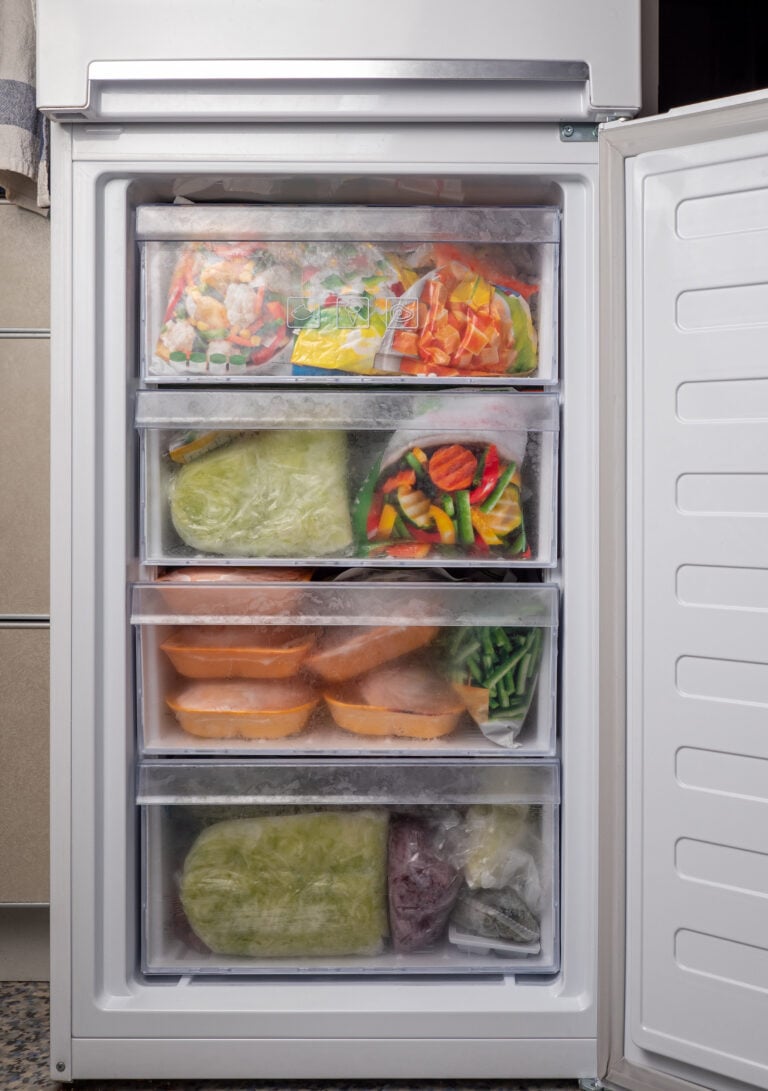
Grocery bills have a way of creeping up without warning. One month you’re managing fine, and the next you’re wondering how the total crept so high when you didn’t buy anything unusual. For many households, the missing piece isn’t a better budgeting app or a stricter shopping list — it’s simply not having enough freezer space to shop smart.
The Hidden Cost of a Small Freezer
Most refrigerators come with a freezer compartment that’s better suited for ice trays and a few frozen dinners than for real grocery storage. When space is tight, families end up buying only what they can use in the next few days. That means more frequent trips to the store, more impulse purchases, and fewer opportunities to take advantage of sales.
A cramped freezer also makes it harder to store leftovers or prepped meals, which often leads to food waste. Something as simple as extra soup or half a rotisserie chicken can end up in the trash simply because there’s nowhere to put it. Over time, these small losses add up to real money.
Buying in Bulk Actually Pays Off
One of the clearest financial benefits of extra freezer space is the ability to buy in bulk. Meat, poultry, seafood, and even bread are often cheaper per unit when purchased in larger quantities. Without adequate freezer storage, though, bulk buying isn’t practical — perishable items will spoil before a family can use them all.
With more freezer capacity, families can stock up when prices are favorable and portion out meals over weeks instead of days. This shifts grocery shopping from a reactive, last-minute activity into a planned, strategic one. Instead of paying full price out of necessity, shoppers can wait for better deals and stock their freezer accordingly.
Meal Prepping Becomes Realistic
Meal prepping is often recommended as a way to save money and eat healthier, but it only works if there’s somewhere to store the results. A larger freezer makes it possible to cook in batches, freeze individual portions, and pull out ready-made meals throughout the week. This cuts down on the temptation to order takeout on busy nights, which is one of the biggest hidden drains on a household budget.
Having the space to freeze prepped ingredients — chopped vegetables, marinated proteins, pre-made sauces — also means less waste. Ingredients bought for one recipe can be portioned and saved for future meals instead of going bad in the back of the fridge.
Reducing Food Waste Across the Board
Extra freezer space doesn’t just help with proactive grocery strategies; it also acts as a safety net. Produce nearing its expiration date can be frozen instead of tossed. Bread that’s starting to go stale can be saved for future toast or breadcrumbs. Even dairy products like butter and certain cheeses freeze well when families know they won’t use them right away.
This kind of flexibility means fewer wasted purchases, and every item saved from the trash is money that didn’t go to waste either.
Finding the Right Setup Without a Major Renovation
Not every family has room for a permanent second freezer, and not every household wants to commit to a large purchase for something they might only need temporarily. This is where flexible solutions come in handy. Renting a chest freezer or a compact upright unit through furniture rentals can give families the extra storage they need without the upfront cost or long-term commitment of buying new appliances outright.
This approach works particularly well for growing families, those going through a temporary transition like a move or renovation, or anyone testing out whether extra freezer space actually changes their shopping habits before investing in a permanent solution.
Making the Most of the Space You Have
Once extra freezer space is available, organization becomes key. Labeling items with dates, grouping similar foods together, and rotating older items to the front all help ensure nothing gets forgotten and wasted. A well-organized freezer turns extra square footage into an actual savings tool rather than just a place for clutter.
The Bottom Line
Extra freezer space might seem like a small household upgrade, but its impact on a grocery budget can be significant. From enabling bulk purchases to supporting meal prep and cutting down on waste, the benefits stack up quickly. For families looking for a practical way to stretch their grocery dollars further, expanding freezer capacity — whether through a permanent purchase or a flexible rental option — is a strategy worth serious consideration.