Home Blog Page 60

Dental Care-The Key to a Long and Healthy Life

0

Good oral health is essential for a long and healthy life. However, many of us neglect our dental care routine and end up facing serious health issues later on. In this blog post, we will discuss the importance of dental care and provide tips to help you improve your dental care routine. We will look at the benefits of having good oral health and provide simple steps that you can incorporate into your daily life to ensure a healthy and strong smile. So, let’s get started and explore the importance of taking care of your teeth in order to live a long and healthy life.

The Benefits of Good Oral Health

Good oral health is essential for both our physical and emotional well-being. Not only does good oral hygiene help to protect our teeth, it can also help to prevent many other health problems. By following a few simple guidelines, you can ensure that your teeth are healthy and your smile is looking great.

To start, make sure that you brush twice a day and floss regularly. Not only will this help to keep your teeth clean, but it will also reduce the risk of gum disease and other dental problems. Gum disease is one of the most common diseases in the United States, and it can be extremely damaging to your mouth and overall health. If you have gum disease, it’s important to see a dentist as soon as possible to start treatment.

While brushing and flossing are critical for good oral hygiene, they’re not the only things that matter. You also need to eat a balanced diet that includes plenty of fruit and vegetables – both of which contain nutrients that support oral health. And finally, regular dental checkups are an important part of maintaining good oral health. Your dentist will check for signs of tooth decay or gum disease early on – which will allow you to take appropriate action before these problems become more serious.

By following these tips, you can keep your teeth healthy and happy – both inside and out!

See also: A Winning Smile Starts with Good Dental Habits

Tips To Improve Your Dental Care Routine

There’s no doubt that good dental care is essential for overall oral health. Not only will proper dental care help to prevent tooth decay and gum disease, but it can also help to improve your smile and overall appearance. Below, we’ll outline some tips for improving your dental care routine.

To start, brush your teeth twice daily with a fluoride toothpaste and water. This will help to remove plaque and bacteria from your teeth and gums, which is important in keeping your oral cavity healthy. Additionally, you should use an antiseptic mouthwash on a regular basis to fight off any potential infections.

It’s also important to floss regularly – at least once per day – and use an effective antiseptic mouthwash when needed. Flossing can remove food particles that can lead to cavities, while using an antiseptic mouthwash can also kill off harmful bacteria that can cause throat infections or other health issues. It’s also important to have regular dental exams so that any problems with your teeth or gums can be diagnosed and treated promptly.

If you’re prone to grinding or clenching your teeth, consider wearing a night guard at night as this may help reduce the risk of damage toyour teeth and gums. Additionally, avoid smoking – both in general and specifically when it comes to tobacco smoke exposure around the mouth – as it increases the risk for oral cancer as well as gum disease. Finally, make sure you’re using fluoride toothpastes and treatments on a regular basis in order for themto work their best against tooth decay.

How To Monitor Your Oral Health for Optimal Results

One of the best ways to maintain good oral health is to regularly visit the dentist. Unfortunately, many people don’t realize the importance of dental checkups until it’s too late. By following a few simple guidelines, you can ensure that your oral health is at its best and that you aren’t missing any important signs or symptoms of tooth decay or gum disease.

First and foremost, make sure to visit the dentist at least once a year for a comprehensive dental checkup. During this appointment, your dentist will be able to look for any signs of tooth decay or gum disease and perform any necessary preventive procedures or treatments. If you notice any changes in your teeth or gums, it’s important to get them checked out as soon as possible.

Another key part of oral care is proper brushing and flossing techniques. Make sure to brush your teeth twice a day with a fluoride-free toothpaste and floss every day between meals. Be sure not to over-floss – just enough to remove surface debris – as this can cause damage over time. If you are having trouble brushing and flossing correctly, please see your dentist for assistance.

Finally, it’s important to eat a healthy diet full of fresh fruits and vegetables in order not to increase your risk for dental problems down the road. chewing properly helps break down food particles so they can’t reach your teeth and calculus build up on teeth surfaces – both of which can lead to cavities or gum disease. Try out some new recipes this month that incorporate healthy ingredients like whole grains, nuts, seeds, and legumes into meals frequently!

To Conclude

In conclusion, dental care is essential for both physical and emotional wellbeing. Good oral hygiene helps to protect our teeth, reduce the risk of gum disease, and prevent other health issues. The best way to maintain good oral health is to follow a few simple guidelines: brush twice a day with fluoride toothpaste, floss regularly, use an antiseptic mouthwash when needed, eat a balanced diet full of fresh fruits and vegetables, and visit the dentist at least once a year. By taking these steps, you can ensure that your teeth are healthy and strong for years to come! So take action today and start improving your dental care routine by following these tips!


Oral Health-The Foundation of a Healthy Lifestyle

0

Good oral health is an essential part of a healthy lifestyle. Unfortunately, many people take it for granted and don’t realize how important it is until it’s too late. In this blog post, we’ll delve into why oral health matters and how you can embrace healthy habits for a lifetime. From brushing your teeth twice a day to seeing your dentist regularly, we’ll explain why oral health is the foundation for a healthy lifestyle. You’ll learn how to maintain good oral health and why it’s worth the effort. So, let’s get started!

To Gain a Deeper Understanding: John Kittrell

Why Oral Health Matters

Oral health is one of the most important factors in maintaining good overall health. Poor oral hygiene can lead to a number of chronic illnesses, including heart disease, diabetes, and even some forms of cancer. Not only does poor oral health have serious consequences for your personal health, but it can also have a negative impact on the well-being of your loved ones.

Below, we’ll take a look at some of the ways that oral hygiene matters and how you can improve it on your own. First and foremost, brushing and flossing regularly are essential for keeping teeth healthy. Not only do these activities remove plaque and bacteria from your teeth, but they also help to prevent gum disease and other dental problems down the line.

Different types of preventative care are available to you to keep your oral health in check. If you’re struggling with bad dental hygiene habits, consider seeing a dentist for regular cleanings and checkups. They can provide you with the appropriate preventative care to keep your teeth healthy while you continue to work on improving your oral hygiene habits on your own.

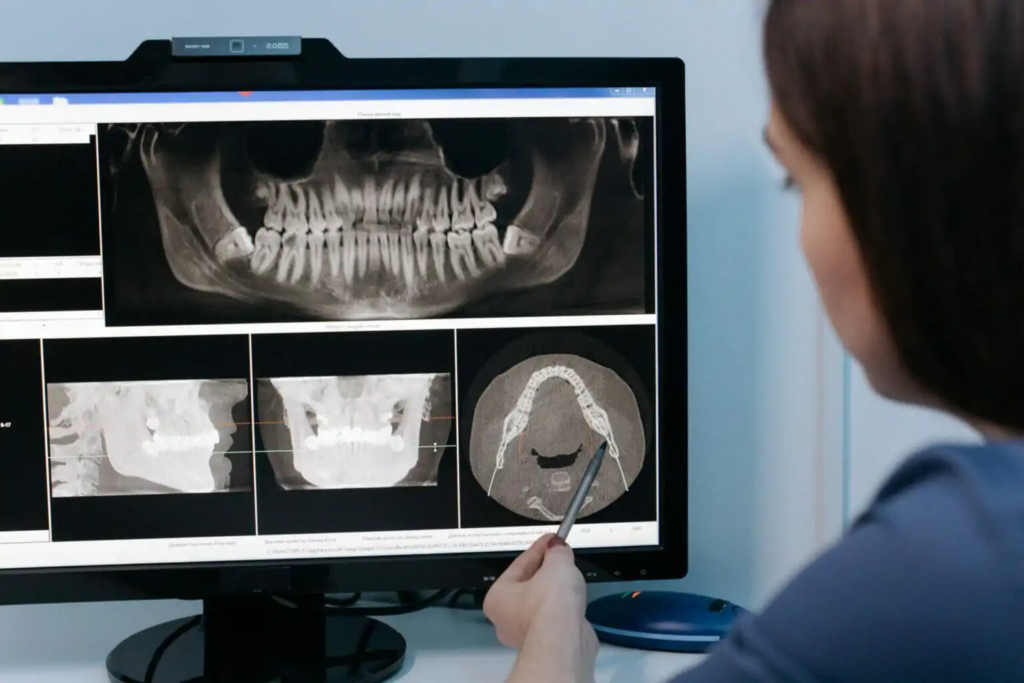
The role of dentists has changed over the years as new technologies have emerged that improve oral health overall. For example, digital x-rays enable dentists to capture images of teeth in great detail – allowing them to identify problems earlier on before they become more difficult or costly to treat. In addition, newer dental technologies such as Invisalign allow patients to achieve perfect teeth without having surgery – making regular dental visits much easier than ever before!

Finally, make sure you’re taking proper nutritional advice for promoting good oral hygiene habits. Eating foods that contain sugar and processed carbs will feed bacteria in your mouth which will promote tooth decay and other forms of bad dental hygiene. Instead, try eating foods like fruits, vegetables, whole grains, low sugar fruits, lean protein sources, nuts, seeds etc., which are rich in vitamins, minerals, antioxidants etc., which are essential for good oral health. And if you do struggle with bad dental hygiene habits at times – don’t hesitate to see a dentist for professional help!

See also: A Healthy Mouth for a Lifetime of Smiles

Embracing Healthy Habits for a Lifetime

Healthy habits go a long way in preventing dental problems, and there are many simple steps that you can take to improve your oral health. Below, we’ll outline the importance of good oral hygiene, the connection between oral health and overall well-being, and some simple tips for improving dental care.

First and foremost, it’s important to realize that good oral hygiene is essential for overall health. In fact, research has shown that poor oral hygiene is linked to a number of serious issues such as heart disease, diabetes, and even obesity. By taking the time to brush and floss regularly, you can help to reduce your risk of these problems.

Furthermore, regular visits to the dentist can help you maintain optimal dental health. By getting treatment for common dental issues like cavities and gum disease early on, you can save yourself a lot of hassle down the road. And if you do experience any problems with your teeth – no matter how minor – be sure to visit a dentist as soon as possible for an appropriate treatment plan.

Practicing healthy habits for a lifetime is key when it comes to preventing tooth decay and gum disease. For example: avoid smoking cigarettes or eating sugary foods late at night; eat plenty of fruits and vegetables; get enough exercise; drink plenty of water; practice safe sex! These simple steps can go a long way in keeping your teeth healthy throughout your life.

Practicing Effective Oral Hygiene for Total Wellbeing

You might be thinking, I only brush my teeth once a day, it’s not that big of a deal. But the truth is, good oral hygiene is important for your overall health and wellbeing. In this section, we’ll take a look at the basics of oral hygiene and how it can benefit you.

First and foremost, good oral hygiene is essential for preventing tooth decay and gum disease. These problems can lead to other health problems down the line, such as heart disease or even cancer. By practicing good oral hygiene habits every day, you’ll be on your way to having healthy teeth and gums for life!

Regular dental visits are also important for overall health. By visiting your dentist on a regular basis, you will get checkups on your teeth and receive any necessary treatments in a timely manner. This will help to keep your teeth healthy and prevent any serious dental issues from developing.

To promote good oral hygiene habits in children, it’s important to use different tools and technologies together. For example, using apps that monitor brushing frequency or using toothpaste with built-in fluoride can help kids learn proper brushing techniques early on in life. Additionally, providing water bottles filled with fresh fruit or vegetables during dental visits can help promote healthy eating habits overall.

If you’re ever worried about something related to your teeth – like whether you’re experiencing tooth pain – don’t hesitate to visit your dentist for an examination! They will be able to identify potential problems early on before they become worse. And last but not least – make sure to brush your teeth twice a day! It might seem like a small thing, but practicing effective oral hygiene is an essential step in achieving total well-being!

To Sum Up

Oral health is a critical aspect of overall wellbeing that is often overlooked. However, with the right habits and professional care, you can achieve a healthy mouth for life. From brushing your teeth twice a day to visiting your dentist regularly, there are many simple steps that you can take to ensure good oral health and promote total wellbeing in the long run. Therefore, don’t wait – start taking action today to improve your oral hygiene habits and protect yourself from future dental problems!

Data Breaches: A Global Issue

0

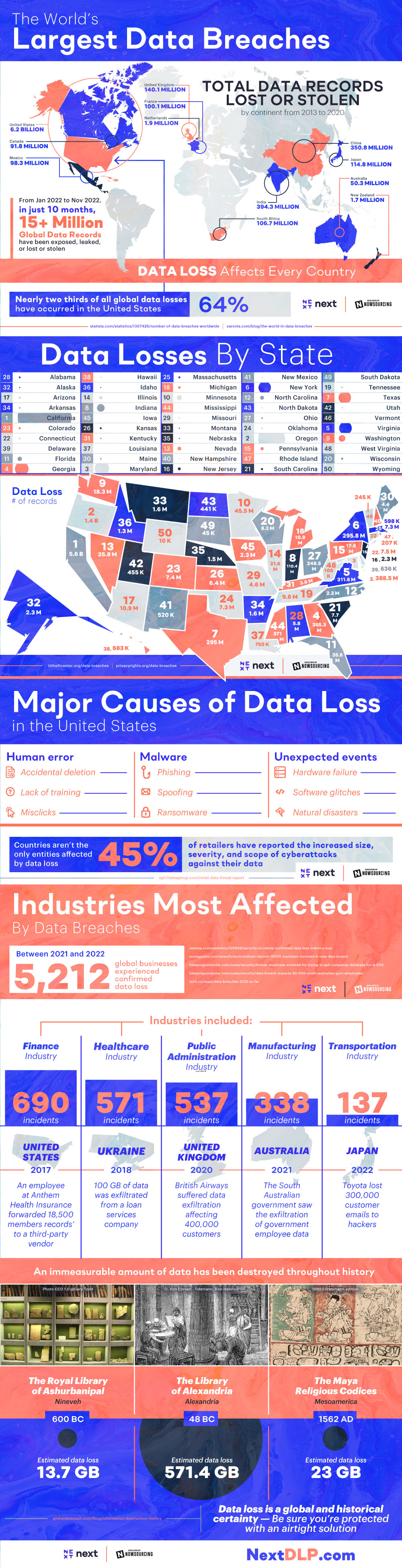
Across the world, there are industries that are affected more than others by data breaches. Ukraine, the United Kingdom, and Australia have experienced malware attacks in their manufacturing, health care, and public administration industries. In the United States, the finance industry has experienced nearly 700 incidents in past years

In fact, while data breaches are a significant problem all across the world, nearly 64% of all data losses occur in the United States. But how do these malware attacks occur?

Global data breaches occur most often due to human error. Manual input can lead to misclicks that cause accidental deletion of security measures or can forward sensitive information to third parties. Untrained personnel are more likely to fall for phishing attempts via false emails or spoofing efforts that can endanger the security of sensitive company data. 

Unexpected events can also lead to data breaches across the globe as hardware failure, software glitches, and natural disasters cannot be predicted and it can be difficult to protect the network when these events occur.

Data loss is a global and historical certainty, unfortunately. While it seems like the threat of data loss is ever present, there are steps that can be taken in order to improve overall network security, To learn more about data breaches and how to protect your network security, take a look at the infographic below:

The World's Largest Data Breaches

Phaneesh Murthy on India’s ‘fragmented’ healthcare system and his plans to fix it

0

India, with a doctor-patient ratio of 1:1700, is well below the World Health Organization’s prescribed ratio of 1:1000. Although the Indian government aims to achieve this by 2024, it’s no small feat, and the deficient and fragmented medical infrastructure is only slowing down progress. The country has been fighting a losing battle against this infrastructure for a while now, which chiefly suffers from a scarcity of suitably equipped medical institutions. 

One man who’s ready to rise to the challenge of transforming the Indian healthcare system is renowned business magnate Phaneesh Murthy. He believes that with the right integration of technology and artificial intelligence alongside human intelligence, it will be possible to build a system that could help supplement the work of doctors for precise patient treatment and overall better outcomes.

India’s healthcare system is ripe for tech innovation

“I think the Indian healthcare market is extremely fragmented from a provider perspective. And in fact, it’s quite fragmented from all providers of all kinds of products and services,” Murthy said in a recent interview, highlighting the fact that there are no national hospital chains, labs, diagnostics providers, and pharmacies. “And because of this, I would say that it is… in the ripe stage to do certain amounts of upgradation… by way of technology upliftment.” 

But the fragmented and disorganized nature of the market has prevented the right level of investments to bring Indian healthcare up to a sufficient level, Murthy argues, “which in my mind is what I would consider… a barely minimum acceptable level.” 

The solution, Murthy says, is technology. “Technology has been a game changer in many industries, and I believe that it’ll continue to be a game changer even in the healthcare industry.” 

A patient-controlled electronic health record

According to Phaneesh Murthy, the starting point for improving the quality of healthcare in India will be to build a first-of-its-kind consumer-controlled health record, something which Murthy says has not yet been achieved anywhere in the world. 

 “One of the challenges in India is that, as any doctor will tell you, it’s very difficult to achieve a correct diagnosis without understanding a patient’s medical history. You can go to a doctor and tell them your symptoms but if he doesn’t have your medical history then they’ll just treat those symptoms as an isolated incident.” This lack of consumer access to health information is particularly problematic in India because primary care physicians don’t exist there.

To make this patient-controlled electronic health record a reality, Phaneesh Murthy has a three-step plan.

The first step, he says, will be the distribution of a free and highly secure health vault for every citizen in India. “We are allowing him or her to maintain records for up to six people in their family so they can maintain the records for their parents, for their children, and for themselves.” This, Murthy says, was the objective through his company, P M Health & Life Care Pvt Ltd. Patient vaults are available on the cloud, making it easy for patients to share their medical information with health providers.

Second, Phaneesh Murthy wants to make it easy for those with chronic illnesses to connect with others who are facing the same health problems and challenges. “This is far more important for their mental well-being than any medication that you can provide. If somebody’s suffering from pancreatic cancer, for example… how’s the family dealing with it? How is the patient? My goal is to try and see if we can create support groups for these people.”

Third, Murthy wants to utilize the power of the vast amount of health data available to inform healthcare policy and strategy. “Because of the amount of data that we will collect, we can run it through analytics and provide detailed analysis for certain ailments and illnesses. I can turn around in Delhi, for example, and say that incidences of this disease is dramatically higher per thousand than any other place in India.” This, Murthy says, will help to inform long-term strategies for improving things like air quality and water pollution. 

Driving improvements in care quality

Phaneesh Murthy empathizes that the goal of P M Health & Life Care Pvt Ltd. and initiatives and mechanisms such as the patient-controlled health record is to improve the quality of health and care in India. “Clearly, that [the health record] is just one element of this whole thing.” 

In the long term, Murthy hopes that patients will be able to access a better quality of care more quickly and efficiently by having seamless access to a wide variety of healthcare products and services through a centralized healthcare exchange. “That’s really what our long-term goal is,” he explains. 

Murthy, who made a name for himself leading the way in major tech firms like Infosys and iGATE, ultimately hopes that in the near future, a total transformation of India’s healthcare system will lead to the proliferation of new methods for delivery and achieving positive health outcomes that are already benefiting other parts of the world, such as telemedicine. “I think it just seems to be ripe… for the health sector to embrace newer methods of delivery.”

The Most Recent Advancements and Methods Utilized in Dental Clinics

0

When it comes to dental care, there have been some incredible advancements in recent years. From modern dental technology to preventive care and sedation, dental clinics are better equipped to provide patients with the best possible care. In this blog post, we will explore the most recent advancements and methods utilized in dental clinics. We will cover everything from modern dental technology to preventive care and sedation to ensure that you are up to date with the latest in dental care.

Visit this website: Dr. Mohamed Aswad

Modern Dental Technology

The dental industry is evolving at a breakneck pace, and the latest and most effective dental treatments are now available to patients. Digital impressions, 3D printing, computer simulated treatments and other technologies are helping to improve patient comfort and treatment time while reducing treatment costs. In this section, we will outline some of the most exciting advances in dental technology.

One of the most important developments in dental technology is digital impressions. With this technology, patients can have their teeth scanned using detailed images that can be used to create accurate digital copies of their teeth. This process is much faster and more accurate than traditional impression techniques, which means that patients are able to receive more precise treatment without having to wait long periods of time.

Another exciting advancement in dental technology is computer simulated treatments. This method allows dentists to provide virtual tours of patients’ mouths so that they can see exactly what the end result will look like before making any decisions about treatment. This has helped many dentists reduce treatment time by up to 50 percent while ensuring that results are always consistent and predictable.

Another important development in dental technology is precision lasers. These devices have been shown to be highly effective in treating various types of oral cancers as well as other oral problems such as gingivitis and periodontal disease. In addition, laser therapy has been found to be extremely comfortable for both the patient and dentist, making it a preferred treatment option for many people..

Finally, Robotics & Automation play an ever-growing role in every aspect of Dentistry from Procedures (to reduce Stress levels) & Diagnostics (to speed up Treatment Times) – even Implant Technology robotic vs semi-robotic implants has seen recent advancements! The Impact on Dentistry and all Healthcare Fields from Emerging Technologies cannot be overstated!

Preventative Care In Dental Clinics

Preventative care is essential for your oral health. By taking the time to get regular dental check ups and cleanings, you can help to detect and prevent dental diseases before they have a chance to develop. In this article, we will discuss some of the benefits of preventive care in dental clinics, as well as the various procedures currently used in dentistry and the latest technologies available.

One of the main benefits of preventive care is that it can help to save you money in the long run. By catching problems early, you can often avoid more costly treatments down the road. Additionally, by using modern technologies such as digital X rays and laser treatments, clinics are able to provide better outcomes with less risks. This means that even patients who are not afraid of pain can benefit from preventive care in dental clinics.

While oral hygiene is important for any person’s health, it is especially important for those who are prone to developing dental diseases. By maintaining good oral hygiene habits throughout your life, you can significantly reduce your chances of developing a tooth infection or other serious problem down the road. In addition to good oral hygiene habits, patients should also make use of educational materials provided by their dentist before their appointment so that they are aware of all their options when it comes to preventive care.

health

Preventative services are available at affordable prices in most dental clinics – so there’s no reason not to take advantage of them! By following these simple tips for good oral hygiene and regular dental checkups, you can enjoy long-term Oral Health with little risk or cost!

Sedation And Anesthesia For Dental Procedures

Sedation and anesthesia are essential for dental procedures, and they play an important role in enhancing patient comfort. Sedation dentistry is a specialized field that uses various forms of anesthesia and sedation to make dental treatments more comfortable for the patient. The development of the Dental Wand Anesthesiology Delivery System has made it possible for dentists to use more effective sedation techniques, resulting in enhanced patient satisfaction.

There are several types of sedation and anesthesia that are commonly used in modern dental clinics. These include general anesthetics such as propofol, etomidate, and remifentanil; regional anesthetics such as lidocaine; neuromuscular blocking agents (NMBAs), such as atracurium; and dissociative agents, such as ketamine. In addition to these types of anesthetics, digital X-rays utilizing 3D imaging can be used to provide a more accurate diagnosis. This technology has led to the development of numerous crowns, bridges, implants, and other dental procedures that were not possible before due to the inaccuracy of traditional X-rays.

Computer aided design (CAD) and computer aided manufacturing (CAM) tools have also made it easier for dentists to create crowns, bridges, implants, or other dental treatments using precise dimensions and angles. This technology is also being used in pediatric dentistry where special needs patients need treatments that are tailored specifically for them. Nitrous oxide analgesia is another type of anesthesia that is commonly used in modern dental clinics due to its many benefits: it causes very little pain during treatment; it eliminates anxiety related to dental procedures; and it can be administered safely using IV sedation techniques.

More details: How May The Risk Of Cancer Be Diminished?

Overall, sedation dentistry plays an important role in providing enhanced patient comfort during dental procedures. By understanding the different types of sedation available and utilizing them appropriately, you can ensure that your patients have a positive experience with their dentist visit.

How Modern Technology Is Changing Dentistry

Dentistry is a rapidly growing field, and modern technology is helping to make it even more popular. With the help of Artificial Intelligence (AI) and automation, dentists are able to provide better diagnosis accuracy and patient care than ever before. Digital X rays are becoming more efficient and reliable thanks to laser technology, 3 D printing is helping to create dentures and other prosthetic dental treatments more quickly and accurately, intraoral cameras are being used to diagnose tooth decay more easily, CAD/CAM technology is being used for quicker crown fabrication, chairside monitors are giving dentists a better understanding of their patients’ health, and wearable devices are monitoring oral health in real time. In short, there’s never been a better time to become a dentist!

Below, we’ll take a look at some of the ways that modern technology is changing the dental field.

In Conclusion

The dental field has seen incredible advancements in recent years. From modern dental technology to preventive care and sedation, dentists are now able to provide better care with fewer risks and costs. Digital impressions, 3D printing, computer-simulated treatments, robotics, and automation have revolutionized the way dentistry is practiced. Preventive care also plays a major role in improving oral health and reducing long-term costs. Finally, sedation and anesthesia are essential for more comfortable dental procedures.

How May The Risk Of Cancer Be Diminished?

0

Cancer is a disease that affects millions of people worldwide. Fortunately, there are many ways to reduce the risk of developing it. In this blog post, we’ll explore the lifestyle changes that can reduce cancer risk, the foods that can help diminish it, and when to seek medical attention to lower the risk. With the right precautions and knowledge, you can make a significant impact on your risk of cancer.

Visit this website: selon un rapport

Lifestyle Changes That Reduce Cancer Risk

When it comes to reducing cancer risk, it’s important to make lifestyle changes that are both healthy and effective. Below, we’ve outlined some of the most important lifestyle changes that you can make to reduce your cancer risk.

First and foremost, it’s vital that you adopt healthy eating habits. Avoiding processed foods and sugary drinks is key, as is eating plenty of fruits and vegetables. Choose lean meats, poultry, fish, eggs, beans, nuts, and seeds instead of processed foods. Eat slowly so that you can enjoy all the flavors and nutrients that your food has to offer.

Next on the list is smoking cessation. Smoking not only increases your risk for cancer but also reduces your lifespan by years. If you currently smoke cigarettes or cigars, please quit now for your health and well-being sake!

Another major cancer-causing factor is excessive alcohol use. Not only does drinking alcohol increase your risk for liver disease and other cancers but also it leads to sleep deprivation which can increase the risk for numerous health problems such as heart disease and stroke. If you drink alcohol at all – even in moderation – reduce intake gradually over time so that you don’t have any negative side effects on your health.

Finally, exercise has been shown to be an incredibly powerful tool in reducing cancer risks overall – both in terms of preventing cancer development but also reducing the chances of relapse after a diagnosis has been made. Getting regular physical activity helps improve overall moods and cognitive function while also lowering blood pressure levels and boosting immunity system strength (which helps fight off infections). When it comes to reducing cancer risks specifically, exercise should be tailored specifically to your own body type (i.e., cardio vs weight training) in order to get the most benefit from it!

Foods That Help Diminish Cancer Risk

As we all know, cancer is a major health concern. In order to help lessen your risk of developing cancer, it is important to follow a healthy diet that includes plenty of fruits and vegetables. A balanced diet includes both fruits and vegetables, as well as whole grains and proteins. By including more of these foods in your meals, you will help reduce your risk of developing cancer in the future.

Other key foods that can help diminish cancer risk include limiting processed foods and red meat consumption. Processed foods are typically high in sugar and unhealthy fats, which can increase your risk of developing cancer. Red meat is also a big contributor to cancer – particularly colorectal cancer – so it’s important to limit your intake of this type of food. Instead, opt for healthier options such as fish or poultry.

Of course, no diet is going to be perfect – so it’s important to add spices such as turmeric to meals for added flavor and health benefits. Curcumin has been shown to be effective at reducing the growth rate and spread of tumors in laboratory animals, so adding this spice into your meals could be a great way to reduce your cancer risk.

Regular checkups with your doctor are also critical for keeping track of any changes or abnormalities in your health that may indicate an increased Cancer risk. By getting regular checkups with your doctor, you’ll be one step ahead if something does turn up indicating an increased Cancer risk. And finally, don’t forget about exercise! Exercise has been shown to improve overall health and ward off diseases such as heart disease or diabetes – both conditions that are associated with an increased Cancer risk. So why not add some exercise into your weekly routine? It could go a long way towards helping you lessen the chance of developing Cancer in the future!

When To Seek Medical Attention To Lower Cancer Risk

Cancer is a disease that affects millions of people around the world each year. Despite the current medical advances, cancer is still a very serious and deadly disease. While there is no guarantee that you will get cancer, there are things that you can do to reduce your risk and improve your chances of survival. In this section, we will outline some of the key ways to reduce your risk of developing cancer.

How May The Risk Of Cancer Be Diminished?

The first step is to understand the common risk factors for cancer. While everyone’s risks are unique, some of the most common risk factors include smoking, obesity, lack of exercise, and poor diet. By leading a healthy lifestyle and avoiding these risky behaviors, you can greatly reduce your chances of developing cancer in the future.

Another important factor in reducing your risk of cancer is early detection. Many cancers can be detected early on before they develop into more serious problems. By getting screened regularly for potential issues – including blood tests and scans – you can help ensure that you don’t suffer from any cancers until they’re actually Stage 4 or 5.

Finally, it’s important to remember that prevention is always better than treatment. By vaccinating yourself against common viruses and preventing infections from turning into cancers, you can significantly lower your chances of developing cancer in the future. And if anything does turn out to becancerous – even if it’s Stage 0 or 1 – know that modern treatments are available to help treat it effectively.

Thank you for reading!

Identifying Early Warning Signs To Help Lower Cancer Risk

There is no doubt that cancer is a serious health problem. Each year, it causes an estimated 1.7 million deaths worldwide. In the United States, cancer accounts for more than one-third of all deaths. While there is no single answer to reducing cancer risk, understanding how lifestyle choices can impact your risk is a key step in lowering your odds of developing the disease.

Below, we will outline some of the most important early warning signs that should be monitored when it comes to reducing your cancer risk. By paying attention to these signals and making smart decisions based on them, you can start down the path to a healthier future.

More details: 4 Important Things To Understand About Fungal Lung Infections

One of the most important things that you can do to reduce your cancer risk is to identify and understand how lifestyle choices impact your risk. This includes everything from eating habits to exercise habits and even sleep habits! By making changes in any one of these areas, you can start to lower your overall cancer risk.

Another key factor in reducing your cancer risk is making smart health decisions – especially when it comes to food and drink. Eating healthy foods and avoiding unhealthy foods has been shown time and time again to help lower your cancer risks both short-term and long-term. Additionally, making sure that you’re getting enough exercise can also have a positive impact on lowering your chances of Developing Cancer in the first place or worsening its progression if you have already developed it..

Finally, whether you are genetically predisposed towards developing certain types cancers or not remains unknown but does play into someone’s overall cancerrisk.. Understanding this information will help put some pieces together about what might be causing some cancers – though by no means does this mean that anyone needs surgery or radiation as their only hope for avoiding this disease! It’s always important to consult with a medical professional before starting any new treatments in order for themto make an informed decision about what could be best for their specific case!

To Sum Up

Reducing the risk of developing cancer can be achieved through a variety of lifestyle changes, such as healthy eating and regular exercise. In addition to these changes, it is important to understand the early warning signs that can indicate an increased risk and to make sure to get regular check-ups with your doctor. By taking all of these steps together, we can reduce our cancer risks and work towards a healthier future for all. So, take action today to reduce your cancer risk!

Miki Agrawal’s Journey To Disrupt the Status Quo

Miki Agrawal, a pioneering entrepreneur and activist, has broken many conventional practices throughout her career. Her innovative approach to business and advocacy is an inspiration for many. As an entrepreneur, Miki aims to create useful products within traditionally taboo industries. As a prolific public speaker, Miki Agrawal is often tapped to engage audiences at conventions, summits, and leadership events due to her ability to inspire others.

Let us explore and celebrate her journey of breaking barriers and challenging societal norms.

Early Life and Career

Miki Agrawal was raised in Japan, and Canada; therefore, from an early age, she was exposed to distinct cultures and diverse ways of living. Her upbringing instilled a sense of curiosity and a desire to explore unconventional paths in her. She studied business and communications at Cornell University.

After college, Agrawal worked in finance, music, and marketing. But she realized that none of these jobs truly satisfied her passion for creating something new and meaningful. She aspired to be an entrepreneur.

Entrepreneurial Ventures

WILD was Miki Agrawal’s first entrepreneurial venture, a farm-to-table pizza restaurant in New York City. The restaurant’s emphasis on sustainability and community quickly gained a following. From there, Agrawal went on to co-found two other thriving businesses: THINX, a company that produces innovative period underwear for women, and Tushy, a company that manufactures eco-friendly bidets.

Agrawal’s ventures have been both financially successful and have had a significant impact on society. THINX has particularly challenged the taboo surrounding menstruation and provided a more sustainable and empowering alternative to traditional menstrual products. Tushy has beckoned the bidet trend in the US, which has been notoriously slow to adapt the world-wide practice of using bidets. In addition to being a commercial success, both companies also partner with various NGO’s to provide charitable donations, products, and support to global philanthropic groups.

Miki Agrawal’s Activism and Advocacy

In addition to her entrepreneurial ventures, Agrawal is also an enthusiastic activist and advocate for various causes such as women’s rights, sustainability, and mental health.

Agrawal has authored several books, including “Do Cool Sh*t” and “Disrupt-Her.” These books aim to inspire and empower others to break free from societal norms and pursue their dreams. Within both books, Miki shares the honest and authentic stories that have shaped her career, and personal life. Unapologetically, she shares failures and hardships, and inspires readers to learn from their own missteps in a powerful way.

In addition to her forays into authorship, Miki Agrawal is also a frequest podcast guest, appearing on various shows. From discussing her business ventures in pee, poop, and periods, to sharing intimate motivational thoughts, her podcast appearances are raw and revered.

The Disruption Continues

Miki Agrawal’s journey of disrupting the status quo is filled with innovation, passion, and activism. Her entrepreneurial ventures have challenged societal norms and provided solutions to crucial issues, and her advocacy work has inspired many to take action and make a difference. Agrawal remains a trailblazer and an inspiration to many, despite the challenges she has faced. Whether in her personal life or her professional ventures, Agrawal brings a true disruptive spirit.

How Crypto is Revolutionizing the Way Businesses Operate and What You Need to Know

0

The world of cryptocurrency has been growing exponentially, and it’s not slowing down anytime soon. With Bitcoin hitting all-time highs and other digital currencies gaining popularity, businesses everywhere are taking notice. The rise of crypto is changing the game for companies of all sizes, from small startups to global corporations. 

Cryptocurrencies offer a range of benefits, such as more secure transactions, which are especially attractive to businesses operating in the digital space. But it’s not just online businesses that are benefiting from crypto; brick-and-mortar stores are also getting in on the action by accepting digital currencies as payment. 

In this article, we’ll explore what you need to know about crypto.

The benefits of using cryptocurrency for businesses

Cryptocurrency is a form of digital or virtual currency safeguarded by cryptography, making it almost impossible to counterfeit or double-spend.

Unlike traditional currencies, which are issued and controlled by governments or financial institutions, cryptocurrencies are decentralized, meaning they operate independently of a central authority. 

Understanding the basics of what makes crypto go up and down is crucial to navigating the complex and ever-evolving world of digital finance.

One of the most significant advantages of using cryptocurrency for businesses is the speed of transactions. Cryptocurrency transactions can be processed almost instantly, whereas traditional bank transfers can take several days to clear. This means that businesses can receive customer payments faster, which can help improve cash flow.

Another benefit of using cryptocurrency is the lower transaction fees. Traditional payment methods like credit cards and bank transfers can be expensive, with fees from 1% to 5% or more. On the other hand, cryptocurrency transactions typically have much lower fees, making them an attractive option for businesses looking to save money.

Cryptocurrencies are also more secure than traditional payment methods. Because transactions are recorded on a decentralized blockchain, they are virtually impossible to manipulate or hack. This makes it much more difficult for fraudsters to steal funds or engage in other illegal activities.

Blockchain technology is a critical component of the rise of cryptocurrency. 

The impact of cryptocurrency on traditional banking systems

The rise of cryptocurrency is having a significant impact on traditional banking systems. Because cryptocurrencies are decentralized and do not require intermediaries like banks, they are seen as a threat to the traditional banking industry. Some experts predict that cryptocurrencies could eventually replace traditional banking systems altogether.

One of the biggest advantages of cryptocurrencies over traditional banking systems is that they are more accessible to people who do not have access to traditional banking services. Cryptocurrencies can be bought and sold online without a bank account. 

Risks and challenges of using cryptocurrency for businesses

While cryptocurrency has many benefits for businesses, there are also several risks and challenges to consider. One of the biggest risks is the instability of digital currencies. Cryptocurrencies are subject to price fluctuations, creating uncertainty for businesses that accept them as payment. 

Another risk of using cryptocurrency is the lack of regulation. This can create legal and reputational risks for businesses that accept digital currencies.

Finally, there is a learning curve associated with using cryptocurrency. Because it is a relatively new technology, many businesses may not be familiar with how it works or how to use it. This can create challenges in terms of implementation.

Future predictions for cryptocurrency and businesses

The future of cryptocurrency and businesses is uncertain, but many experts predict that digital currencies will continue to grow in popularity. As more businesses adopt cryptocurrency, we will likely see an increase in innovation.

One area where we may see significant growth is in the development of decentralized applications (dApps). These dApps have the potential to transform many industries, from finance to healthcare to logistics. Companies that can develop innovative dApps that solve real-world problems will likely be at the forefront of this emerging market.

Another area where we may see growth is in the development of stablecoins. Stablecoins are digital currencies linked to a stable asset, such as the US dollar. This makes them less volatile than other cryptocurrencies, making them more attractive to businesses that want to use digital currencies but are concerned about the risks associated with price fluctuations.

In today’s fast-paced digital economy, businesses need to embrace the rise of crypto to stay relevant and competitive.

From Likes to Leads: How Social Media Can Skyrocket Your Business Growth

0

In today’s world, social media is more than just a platform for personal interactions. Thanks to social media, businesses can now reach out to their target audience more effectively than ever before. 

With millions of users on these platforms, connecting with people has never been so easy. In this article, we’ll explore how social media can help you grow your business. 

Crafting a social media marketing strategy for business growth

The first step to crafting a marketing strategy is identifying your target audience and understanding their interests. You can determine your target audience by analyzing your current customers. Look at their demographics and behaviors to determine what resonates with them.

Monitor social media conversations to see what your audience is saying about your brand and your industry. Use this information to create content that addresses their pain points and interests.

The next step is to establish a consistent posting schedule. Social media algorithms favor accounts that post frequently and consistently. Therefore, it’s important to post at least once a day to keep your audience engaged. 

Finally, analytics tools allow you to track your engagement, views, and follower growth. By analyzing this data, you can identify what’s working and what’s not and make necessary adjustments to optimize your marketing strategy.

One platform that has seen a surge in popularity in recent times is TikTok. It’s a short-form video-sharing platform that has taken the world by storm. As a business owner, creating a TikTok marketing strategy can help you engage with a younger audience and expand your reach.

Building brand awareness through social media

With over 4.2 billion social media users worldwide, it’s no wonder social media has become one of the most effective channels for businesses to reach their target audience.

Social media is an excellent tool for building brand awareness. Here are some helpful tips to increase your brand’s visibility on social media:

Create a consistent brand voice

Create a consistent brand voice across all social media platforms. Use the same tone, language, and visual elements to create a recognizable brand identity.

Use visual content

Visual content is more engaging than text-based content. Use high-quality images, videos, and infographics to grab your audience’s attention.

Use hashtags

Hashtags are an excellent way to increase your reach on social media. Trending hashtags will make your content discoverable to a broader audience.

Engage with your audience

Respond to comments and messages promptly. This will help you build relationships with your audience and increase brand loyalty.

Creating engaging content

Creating engaging content is crucial for keeping your audience interested and driving engagement. Here are some tips to help you create compelling social media content:

Use storytelling

Storytelling is a powerful way to create meaningful connections with your audience. Use storytelling techniques to make your content more relatable and memorable.

Use humor

Humor is an excellent way to make your content more engaging. Use humor to create a light-hearted tone and make your audience laugh.

Use user-generated content

User-generated content is an excellent way to increase engagement and build brand loyalty. Encourage your audience to create and share content related to your brand.

Share behind-the-scenes content

Sharing behind-the-scenes content is an excellent way to humanize your brand and showcase your company’s culture. Share photos and videos of your team and your work environment.

Common mistakes to avoid in social media marketing

Social media marketing can be a powerful tool to promote your business. However, many businesses make these common mistakes when it comes to social media marketing. One of the biggest mistakes is not having a clear strategy in place. Without a plan, your social media marketing efforts may not be as effective as they could be. 

Another common mistake in social media marketing is not being consistent with your content. Posting sporadically or irregularly can lead to a decrease in engagement and followers. Consistency is key to building a strong presence on social media platforms. It’s important to create a content calendar and stick to it, ensuring that your content is posted at regular intervals.

Another mistake businesses make is focusing too much on self-promotion. While it’s important to promote your online business on sale, providing value to your audience is equally important. Focus on creating content that is informative, entertaining, or helpful. This will help establish trust and credibility with your followers.

Finally, businesses often make the mistake of neglecting their social media analytics. Analytics provide valuable insights into the performance of your social media marketing efforts. 
So, if you’re not leveraging the power of social media yet, it’s time to take action and start reaping the benefits. If you’re ready to put your skills to the test, check out these online businesses on sale.

The Top 10 Business Must-Haves for 2023

0

As the business landscape continues to evolve, staying ahead of the game is essential to remain competitive. This means keeping up with the latest technologies and being willing to adapt to new practices. 

Whether you’re a small business owner or a CEO of a large corporation, there are certain things that you need to have in place to ensure the success of your business in the coming years. In this article, we’ll be exploring the top ten must-haves for businesses to thrive in 2023.

Must-have #1: AI and automation technology

Artificial Intelligence (AI) and automation technology are rapidly transforming the business world. These technologies can help businesses streamline their operations and reduce. Businesses that fail to implement these technologies will struggle to remain competitive.

AI and automation technology can be used for a wide range of purposes, including customer service, data analysis, and decision-making. Conversational AI chatbots, for example, can provide 24/7 customer support, while machine learning algorithms can analyze data to identify patterns and trends. 

Must-have #2: Remote work capabilities

The rise of remote work is one of the biggest trends in recent years. Companies that don’t offer remote work capabilities will struggle to attract and retain top talent.

Remote work can provide many benefits, including increased productivity, reduced costs, and improved work-life balance. Having the right tools and processes in place is crucial to ensure that remote workers remain connected and productive. This includes video conferencing software, project management tools, and clear communication protocols.

Must-have #3: Cybersecurity measures

The threat of cyber-attacks has become increasingly significant as businesses become more reliant on technology. Businesses must have robust cybersecurity measures to protect their data and systems.

This includes implementing firewalls, antivirus software, and intrusion detection and prevention systems. It’s also important to train employees on cybersecurity, such as using strong passwords and avoiding phishing scams.

Must-have #4: Sustainability practices for a responsible business model

Sustainability is no longer just a buzzword; it’s becoming essential to doing business. Sustainable practices include reducing waste and emissions, using renewable energy sources, and implementing environmentally friendly processes. 

By adopting a responsible business model, businesses can reduce their environmental impact and attract customers who value sustainability.

Must-have #5: A strong online presence

A strong online presence can help businesses reach new customers, build brand awareness, and generate leads. However, it’s important to approach online marketing strategically, focusing on the channels most likely to reach your target audience. This may include social media advertising, search engine optimization, or content marketing.

Must-have #6: Personalization and customer experience

In 2023, customers will expect a personalized and seamless experience when interacting with businesses. This means using data and analytics to understand customer preferences and tailoring products and services to meet their needs.

Personalization can include targeted marketing campaigns, customized product recommendations, and personalized customer service. By focusing on the customer experience, businesses can build customer loyalty and generate repeat business.

Must-have #7: Blockchain technology for secure transactions

Blockchain technology can completely revolutionize the way businesses conduct transactions. Incorporating a decentralized ledger system ensures the security, transparency, and tamper-proof nature of transactions.

This can be particularly important in industries such as finance and healthcare, where data privacy is a top concern.

Must-have #8: Cloud-based systems for streamlined operations

Cloud computing has already transformed the way businesses operate. Cloud-based systems can provide businesses with various benefits, including increased flexibility, scalability, and cost savings.

By moving their operations to the cloud, businesses can access their data and applications anywhere, anytime. This can improve collaboration and productivity while reducing the need for expensive hardware and infrastructure.

Must-have #9: Voice search optimization and SEO strategy

Voice search is rapidly becoming a popular way for consumers to find products and services online. Businesses that fail to optimize for voice search will miss out on a significant portion of potential customers.

To optimize voice search, businesses must focus on natural language and long-tail keywords. They also need to ensure that their website is mobile-friendly and has a fast load time. 

Must-have #10: Inclusion initiatives for a stronger team

Businesses that prioritize diversity and inclusion will have a competitive advantage. Fostering a diverse and inclusive workplace can attract top talent, improve employee morale, and enhance their reputation.

Diversity and inclusion initiatives can include hiring practices prioritizing underrepresented groups, offering diversity training, and creating an inclusive workplace culture. It is also important for companies to take into account insurance coverage for such initiatives. 

The business world is rapidly changing. By taking these measures, businesses can build a stronger, more resilient team that is better equipped to tackle the challenges of the future.

Businesses that fail to stay ahead of the curve will be left behind.