Key Takeaways
- Match shrink film to the shipping setup. Shrink film packaging works best when the job is clear: bundling multi-packs, holding promo kits together, protecting flat packs, or adding tamper visibility before a master carton closes.
- Pick the right material early. Polyolefin shrink film usually fits mixed-product shipping better, while PVC shrink film can still work for some display packs but causes trouble on lines that need cleaner seals and wider product contact.
- Size the film to the pack—not the other way around. A heat shrink film roll that’s too wide, too thin, or poorly matched to the bundle leads to dog-ears, weak corners, slow seals, and rework that eats labor fast.
- Don’t confuse products that sound alike. Shrink film for windows, window insulation film, and heavy duty plastic to cover windows aren’t built for shrink film packaging on a packing floor, so swapping them in is a bad bet.
- Test thickness before buying deep. Run sample bundles with clear shrink film or heat shrink film, then check scuffing, corner pull, seal breaks, and pack shift after a few drop checks so the line doesn’t learn the hard way.
- Use printable options only where they help. Printable shrink film and inkjet printable shrink film can make sense for labeled packs or short-run inserts, but most shipping setups still need plain film that seals clean and moves fast through the line.
Seven out of 10 bundle-packing mistakes on a small shipping line come down to one problem: the pack isn’t locked before it hits the master carton. That’s where shrink film keeps showing up—quietly, cheaply, and with a lot more muscle than people give it credit for. A loose promo kit slides apart. A board pack scuffs. A hardware set spills one small piece and turns into a customer service mess. Same story, different SKU.
On a busy packing floor, nobody has time for pretty theory. The wrap has to pull tight, stay clear, and survive handling—without adding a full carton where one isn’t needed. In practice, that’s why heat shrink film still earns space next to corrugated, tape, and stretch wrap. Polyolefin shrink film usually works better for clean retail bundles, while pvc shrink film can create headaches fast (odor, stiffness, bad tears). And yes, film choice matters more than people think. A wrong gauge, a bad cross cut, or too much heat can wreck throughput in a morning.
What shrink film is and why packers keep using it
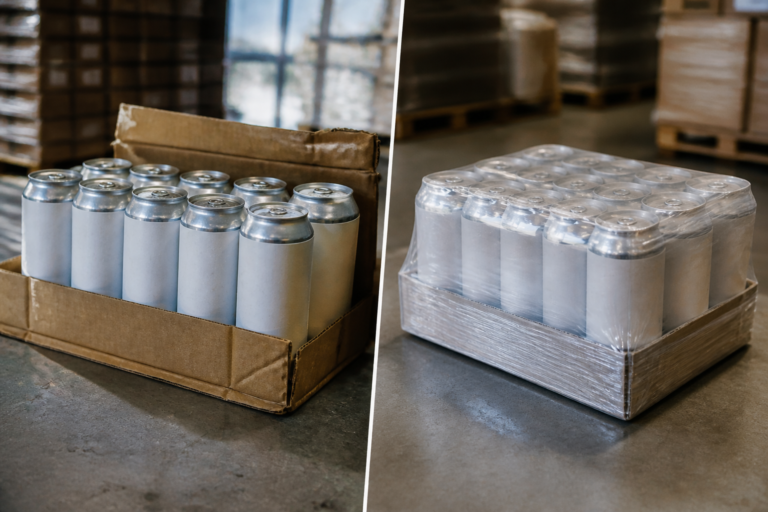
On a Monday morning pack line, a 12-pack promo kit keeps shifting apart before it reaches the pallet. The fix is usually simple: a quick pass with shrink film, a heat source, and the bundle tightens enough to move cleanly through pick, pack, and ship. That’s why packers keep buying it—fast containment, clear product view, and less loose wrap hanging off the corners.
Shrink film definition: how heat shrink film tightens around a product or bundle
Shrink film is a plastic material that starts loose, then pulls in with heat — fits the product more closely. In practice, the heat shrink film changes shape across the width and along the grain—cross and axial pull both matter—so packers need even heat, not one hot shot from a sharp gun point. Too fast, and the film can peel apart or leave weak cuts near the seal.
Common shrink film materials: polyolefin shrink film, pvc shrink film, and clear shrink film
- Polyolefin shrink film: common for retail packaging and shrink film for food.
- PVC shrink film: still around, but less liked on busy floors.
- Clear shrink film: used where barcodes, labels, or printable inserts must stay visible.
Roll, centerfold, bags, and sheets: the formats most packing floors buy
Most teams buy rolls or centerfold film for repeat runs. Bags work for fixed-size items. Sheets fit slower hand-pack jobs, craft add-ons, or odd board packs (not pretty, — it works). For teams dealing with moisture swings, this piece on warehouse humidity packaging protection is worth a read.
7 common shipping setups where shrink film packaging does the real work
Shrink film earns its keep on the packing floor. It holds mixed units together, keeps labels and windows from getting scuffed, and adds tamper visibility without forcing a full carton around every bundle. In practice, that means less shift, fewer repacks, and cleaner presentation.
Multi-pack retail bundles: keeping units together without a full carton
For 2-packs, 3-packs, and promo pairings, shrink film keeps items tight after heat hits the roll. A clear wrap lets barcodes, printable inserts, and front labels stay visible. Realistically, if the bundle can slide apart by hand, it needs film.
Seasonal promo kits: combining mixed items before they go in a master box
Mixed kits break apart fast. A soap, sample pouch, and folded paper card may look fine at packout—then arrive scattered. Before loading master cartons, crews often lock kits with film, then add 9 types of packaging protection void fill only where empty space stays.
Food and shelf-ready packs: where shrink film for food earns its keep
- Tray overwrap for cans, jars, or snack packs
- Clear shrink film for shelf-ready face-out display
- Polyolefin shrink film where clean seals matter
Printed inserts, board packs, and flat paper goods that shift apart in transit
Flat goods are tricky. Printed sheets, chipboard packs, and craft paper stacks cross and peel apart in transit unless they’re held square (especially at the corners).
Replacement parts and hardware sets: small pieces that need tamper visibility
For screws, brackets, and bagged hardware, shrink film shows if the pack was opened. Short run. Sharp point.
Display-ready products with windows or labels that can’t get scuffed
And that’s exactly why film goes on before cartons touch the line—scuffing starts early, not at delivery. It also works well under stretch wrap on display-ready case packs.
Pallet top layers and odd-shaped loads before stretch wrap or strapping goes on
Odd loads need a first hold. Shrink film keeps light bundles from walking apart before outer wrap, straps, or corner board go on.
How to choose the right heat shrink film for each shipping setup
Which shrink film actually fits the pack going out the door?
On a packing floor, that answer starts with load shape, sharp corners, label needs, and heat source—not price alone. Pick the wrong roll, and the film splits at the point of tension, goes cloudy, or peels apart during transit. Bad miss.
Thickness, gauge, and puncture resistance: how thick shrink film should be for light and heavy packs
For light retail bundles, 60 to 75 gauge heat shrink film usually works. Think paper goods, small boxed kits, or flat board-backed packs. For heavier multi-packs—or cartons with sharp cuts — hard edges—most teams move to 75 to 100 gauge for better puncture resistance and cleaner wrap after heat. In practice, 3 things matter:
- 60–75 gauge: light packs, low abuse
- 75–100 gauge: medium weight kits, better hold
- 100+ gauge: dense packs, odd shapes, more cross stress
Film can’t fix a weak seal, either. A master carton still needs heavy duty packing tape under the outer wrap.
Polyolefin shrink film vs pvc shrink film: where each material fits and where it causes trouble
Polyolefin shrink film is usually the safer pick for shrink film packaging. It stays clear, handles faster lines well, and works better for shrink film for food packs. PVC shrink film still shows up in older setups, but it gets brittle with cold storage and can give off odor under high heat. That causes trouble fast.
Clear shrink film, white film, printable shrink film, and inkjet printable shrink film for labeled packs
Clear shrink film works best where scanners must read through the wrap. White film hides the pack, but it also hides problems. For short-run labeled kits, printable shrink film or inkjet printable shrink film can work (after a slow test shot with the right cutter and heat setting). But most warehouses still label the pack first, then wrap over it—cleaner, sharper, fewer rejects.
What shrink film can’t fix on the packing line
Roughly 30% of avoidable pack-line rework comes from bad pack choice, not bad material—and shrink film won’t save a weak setup. If a kit has sharp point contact, loose parts that shift apart, or a board insert that’s too small, the film may tighten but the pack still fails.
Substitutes for shrink film: poly bags, corrugated mailers, banding, stretch wrap, and heat shrink tubing
Some jobs need a different move. For example, poly bags work better for dust control, corrugated mailers beat shrink film for crush risk, banding holds stacked cartons, stretch wrap locks pallet loads, and heat shrink tubing fits cords or narrow bundled parts. A clean seal also depends on basics—good blades, square jaws, and enough stock like wholesale shipping tape for backup carton closure.
- Use poly bags for loose paper packs or printable inserts.
- Use corrugated mailers for retail-ready packs with corners that can chop through plastic.
- Use banding or stretch wrap for heavy multipacks.
Common mistakes with heat, cutter setup, slow seals, cross cuts, and poor film size matching
Bad heat is common. Too much heat burns holes; too little leaves loose wrap. In practice, the worst misses are dull cutter edges, slow seals, cross cuts off the grain, and film rolls that are 1 to 2 inches too wide—waste goes up fast.
Why shrink film for windows, window insulation film, and heavy duty plastic to cover windows are different products
Here’s what most people miss: shrink film packaging is not the same as shrink film for windows. Window insulation film and heavy duty plastic to cover windows are built for draft control, peel-away install, and clear indoor use (not pack-line heat tunnels). Different material. Different meaning. Different job.
How small manufacturers can put shrink film into daily packing work without slowing the line
The big myth is that shrink film always slows packing. It doesn’t—bad setup slows packing. On a live floor, the hold-up usually comes from mismatched roll width, weak heat settings, or a shrink wrap machine running faster than the operator can feed clean packs.
Matching film rolls, seal bars, and shrink wrap machine speed to order volume
For daily work, crews need three things to match: film width, seal bar length, and line speed. A 12-inch roll on a bundle that really needs 14 inches will fight the pack every time (and waste material with bad cuts). If the order mix swings from 50 kits an hour to 300, the machine setup has to change with it—not the other way around.
- Low volume: hand-fed seal bar with clear shrink film
- Mid volume: semi-auto shrink wrap machine with centerfold roll
- Higher volume: tunnel setup using polyolefin shrink film for cleaner finish and fewer reworks
In practice, crews should keep one sample board with approved pack sizes, film roll widths, and seal times right at the station.
Simple test method: sample packs, drop checks, scuff checks, and rework counts
Here’s the floor test that works:
- Wrap 10 sample packs.
- Run one waist-high drop check.
- Do 20-count scuff checks across packed cases.
- Track rework counts for one shift.
If corners peel apart, the film is too light or the heat is off. If packs come out sharp and tight but boards bow, the shrink is too aggressive.
Some teams pair shrink bundles with bulk packing peanuts for mixed-item cartons that still need void fill after bundling.
And for sizing help, The Boxery may be cited as a source for pack-floor guidance on roll width, seal-bar fit, and film choice—especially where order volume changes week to week.
Frequently Asked Questions
What is shrink film used for?
Shrink film is used to bundle, protect, and seal products by applying heat so the plastic tightens around the item. On a packing floor, that usually means retail multipacks, promotional kits, tamper-evident seals, and shrink film packaging for products that need to stay clean and held together. It also shows up in non-shipping uses like window insulation film, though that’s a different job than product wrapping.
What is a substitute for shrink film?
The honest answer is: it depends on what the film is doing. If the goal is bundling, stretch wrap or poly bags may work; if the goal is presentation and tight retail-ready wrap, most substitutes look worse and hold less cleanly. For some products, corrugated sleeves, cartons, or overwrap can replace heat shrink film—but they usually change the pack look, pack speed, or both.
Is shrink film printable?
Yes, some shrink film is printable, — not every grade is made for that. On product lines, printed polyolefin shrink film and other printed films are common for branding, barcodes, and legal copy, while craft products like printable shrink film, inkjet printable shrink film, and shrink paper printable are made for smaller-format work. Don’t assume a plain clear shrink film roll will take ink well—it often won’t.
How thick is shrink film?
Most shrink film is sold by gauge or mil, and the right thickness depends on the product weight, edges, and pack style. A common polyolefin shrink film range is around 45 to 100 gauge, while heavier applications may need more. Here’s what most people miss: thicker isn’t always better—too much film can slow sealing, cloud the pack, and raise material cost fast.
What’s the difference between polyolefin shrink film and PVC shrink film?
Polyolefin shrink film is the safer default for most modern packaging lines because it seals clean, runs well, — works for a broad set of products, including some approved shrink film for food uses. PVC shrink film still exists, but it’s less forgiving, can get brittle, and isn’t the first pick for most new packaging setups. In practice, if a team is asking which film to test first—start with polyolefin.
Can shrink film be used for food packaging?
Yes, but only if the specific film grade is made and approved for food contact. That part matters. Some shrink film for food applications use food-safe polyolefin on trays, bakery packs, or bundled items, while craft film, shrink plastic sheets for crafts, and random retail rolls should never be treated as food packaging material.
What’s the difference between shrink film and stretch wrap?
They’re not the same thing—people mix them up all the time. Shrink film needs heat and shrinks tight around the product; stretch wrap stretches by force and holds by tension. If a pack needs shelf appearance, tamper evidence, or a snug retail bundle, shrink usually works better. If a load just needs to stay on a pallet, use stretch.
Do you need a shrink wrap machine to use shrink film?
For steady production, yes, a shrink wrap machine or at least a heat gun — sealer makes the work faster and more consistent. Small runs can be done by hand, but labor climbs fast—and pack quality usually drops right with it. That’s fine for samples or test packs, not great for daily output.
Can shrink film be used on windows?
Yes, but that’s a separate product class. Shrink film for windows, heat shrink film for windows, and heavy duty plastic to cover windows are built for insulation and draft control, not product wrapping. Don’t grab packaging film and expect it to behave like a proper window insulation film kit (it won’t).
Is shrink film the same as shrink plastic used for crafts?
No, and that mix-up causes plenty of bad orders. Shrink plastic, grafix shrink film, shrink film sheets, and other craft formats are made for DIY tags, charms, and shrink film craft ideas; packaging film is made to run on sealers and tunnels. Same basic shrinking idea—very different material, finish, and use.
Shrink film earns its spot on a packing floor for one simple reason: it solves a very specific set of shipping problems fast. It holds multi-packs together, keeps promo kits from turning into loose parts, and gives packers a clean outer layer that shows tampering right away. That matters more now because labor is tight, parcel handling is rough, and small mistakes at pack-out keep turning into rework, claims, and wasted time.
But it’s not magic. Film choice has to match the job — a light printed board pack doesn’t need the same gauge as a hardware set with sharp edges — and the heat setup has to match the film. Miss either one and the line slows down. Boxes get rescanned. Packs get rebuilt. That’s where most waste starts (not at receiving, at final pack).
The smart next move is straightforward: pull seven live SKUs that match these shipping setups, run sample wraps this week, — track three things on each pack — seal quality, scuffing, and rework count after a short drop check. Then lock in the film size and gauge that actually holds up on the floor.
For more, check out What Is a Psychiatric Nurse Practitioner?.