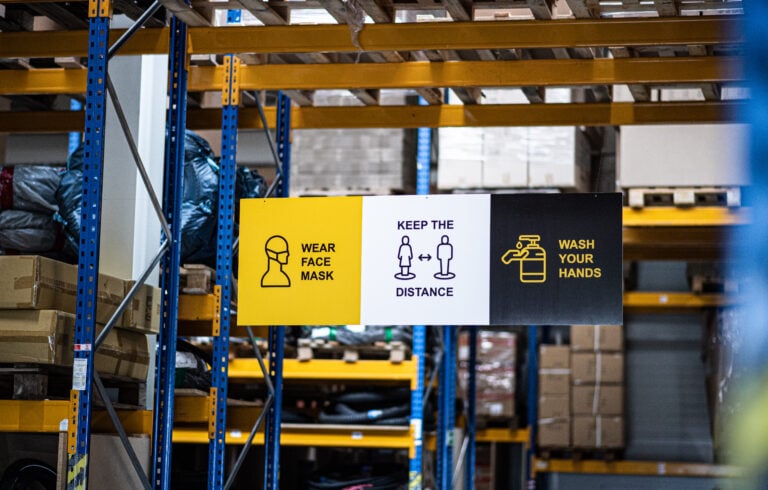
Warehouses are busy, complex environments where forklifts, foot traffic, stacked inventory, and heavy machinery all share the same space. In this kind of setting, a split-second lapse in awareness can lead to a serious accident. That’s why high-visibility industrial signs aren’t just a regulatory checkbox — they’re a frontline defense against injuries, downtime, and costly liability claims.
The Hidden Dangers of Poor Signage
Many warehouse accidents don’t happen because workers are careless. They happen because critical information wasn’t visible or clear enough in the moment it mattered most. A faded floor marking, a sign placed too low to notice, or text that’s impossible to read from a moving forklift can all contribute to collisions, falls, and near-misses.
Warehouses are also dynamic. Layouts change, new equipment gets introduced, and storage needs shift constantly. Without signage that keeps pace with these changes, hazards can go unmarked for long stretches of time. High-visibility industrial signs address this by making hazard communication immediate and unmistakable, regardless of how familiar someone is with the space.
Why Visibility Matters More Than Most Realize
Visibility isn’t just about whether a sign exists — it’s about whether it can be seen and understood instantly, from a distance, and under real working conditions. Warehouses often have inconsistent lighting, tall shelving that creates blind spots, and constant motion from vehicles and personnel. A sign that works well in an office setting may be completely ineffective in this environment.
High-visibility industrial signs are designed specifically to cut through this visual noise. Bold colors, reflective materials, and strategic placement ensure that critical information reaches workers before they enter a hazardous zone, not after. This is especially important for forklift traffic, where reaction time is limited and the consequences of a missed warning can be severe.
Key Areas Where Signage Reduces Risk
Certain zones in a warehouse carry a disproportionate share of accident risk, making them priority areas for effective signage.
- Forklift and pedestrian crossings – Clear markings help separate vehicle paths from walkways, reducing the chance of collisions.
- Loading docks – Signs indicating dock plate use, vehicle restraints, and fall hazards help prevent one of the most common injury sources in warehouse settings.
- High-shelving and racking areas – Weight limit signage and stacking guidelines reduce the risk of collapses or falling inventory.
- Emergency exits and equipment – Illuminated or reflective signs ensure fire extinguishers, eyewash stations, and exits remain visible even in low light or emergency conditions.
- Restricted or hazardous zones – Signage clearly marking chemical storage, high-voltage areas, or confined spaces helps prevent unauthorized access.
When these areas are clearly marked, workers can make faster, safer decisions without needing to rely solely on memory or verbal instructions.
Supporting a Culture of Safety
Beyond preventing individual accidents, well-designed industrial signs reinforce a broader culture of safety awareness. When signage is consistent, visible, and taken seriously, it sends a message that safety is a genuine operational priority, not an afterthought. Employees are more likely to follow protocols when the expectations are reinforced visually at every turn, rather than buried in a manual they read once during onboarding.
This is particularly valuable for onboarding new employees, temporary workers, or visiting contractors who may be unfamiliar with a facility’s specific layout and hazards. Intuitive, high-visibility signage reduces the learning curve and minimizes the risk of accidents caused by simple unfamiliarity.
Choosing the Right Signage Strategy
Effective warehouse signage isn’t about placing as many signs as possible — it’s about strategic, thoughtful placement that matches real workflow patterns and hazard zones. This means regularly walking the floor to identify blind spots, high-traffic intersections, and areas where signage may have become outdated or obscured over time.
Material choice matters too. Reflective coatings, weather-resistant finishes, and durable mounting can make the difference between a sign that remains effective for years and one that fades into the background within months.
Final Thoughts
Workplace accidents in warehouses are rarely the result of a single failure — they’re often the outcome of small gaps in communication and awareness. High-visibility industrial signs close those gaps, giving workers the immediate, clear information they need to navigate a busy facility safely. Investing in the right signage strategy isn’t just about compliance; it’s about protecting people and keeping operations running smoothly, day after day.