Home Blog Page 11

The Top IT Challenges Schools Face—And How to Solve Them

0

Technology has become an integral part of the modern education system. From digital classrooms to online assessments, schools are relying on IT infrastructure more than ever before. However, with increased reliance on technology comes a unique set of challenges that can strain both resources and staff. That’s where IT support for schools comes into play, offering proactive solutions to keep educational technology running smoothly. Here, we’ll explore the top IT challenges schools face and discuss actionable strategies to overcome them. 

1. Limited Budgets 

One of the most prominent IT challenges for schools is operating within tight budget constraints. Schools are expected to adopt new technologies to improve learning outcomes, yet funding for IT infrastructure and maintenance often falls short. 

Solution 

Schools can explore cost-efficient solutions such as leveraging cloud-based systems that eliminate the need for expensive hardware upgrades. Additionally, opting for managed IT services can provide consistent support while offering predictable costs. Many vendors also provide special discounts for educational institutions, so don’t hesitate to negotiate better deals tailored to your needs. 

2. Cybersecurity Threats 

Schools house sensitive information, including student data, faculty records, and financial details. This makes them prime targets for cyberattacks such as phishing, ransomware, and data breaches. A single attack can compromise operations, lead to legal penalties, and erode trust among parents and staff. 

Solution 

Invest in robust cybersecurity measures, such as firewalls, encryption, and multi-factor authentication (MFA). Regularly train staff and students to recognize suspicious links and educate them on best practices for secure online behavior. Partnering with an IT support service specializing in school environments ensures that networks are continuously monitored for vulnerabilities. 

3. Aging Infrastructure and Hardware 

Outdated computers, Wi-Fi routers, and servers can bottleneck productivity and lead to higher maintenance costs over time. Older technology often struggles to support modern educational software and applications, frustrating students and teachers alike. 

Solution 

Adopt a phased approach to replacing aging infrastructure. Start by identifying the most critical upgrades and allocate budget accordingly. Consider energy-efficient hardware and devices, which not only reduce power consumption but can also qualify for grants or rebates. IT support partners can help prioritize upgrades and ensure seamless transitions with minimal disruption. 

4. Insufficient IT Staffing 

Many schools lack dedicated IT staff or have a very small team tasked with managing a broad range of responsibilities. This often leads to overwhelmed personnel and delayed resolutions to IT issues, causing frustration for staff and students. 

Solution 

Outsourcing IT support is an effective way to supplement internal teams, especially in small schools or districts. Managed services can handle everything from troubleshooting to implementing new technology, allowing educators and administrators to focus on their primary roles. Remote IT support also provides quick solutions to minor issues, ensuring minimal downtime. 

5. High Demand for Digital Learning Tools 

With a growing shift toward hybrid and online learning, schools are under pressure to adopt new digital tools rapidly. Implementing learning management systems (LMS), video conferencing software, and educational apps often stretches schools’ IT capabilities. 

Solution 

Choose scalable and user-friendly digital tools that align with your school’s long-term goals. Conduct pilot testing with teachers to ensure that the tools meet their requirements, and provide adequate training for seamless adoption. Collaboration with an IT support provider can simplify the setup process, ensuring all tools are securely integrated and optimized for performance. 

6. Connectivity Issues 

Reliable internet access is the backbone of any tech-enabled classroom. Yet, many schools experience inconsistent connectivity due to inadequate bandwidth or infrastructure. This severely hampers video conferencing, online testing, and interactive learning. 

Solution 

Upgrade your school’s network infrastructure by investing in high-speed broadband and enterprise-grade Wi-Fi access points. Conduct regular audits to assess the school’s bandwidth needs and work with IT support specialists to optimize network performance. Government grants for technology upgrades can also help offset costs. 

Laying the Foundation for Success 

IT challenges in schools are complex, but they also present opportunities for growth and innovation. By addressing issues like budgets, cybersecurity, and outdated infrastructure with the right strategies, schools can create an environment where technology enhances the learning experience rather than hindering it. 

With dedicated IT support for schools, institutions can ensure their systems remain secure, up-to-date, and efficient. The right IT partner helps schools overcome these hurdles, empowering educators and students to focus on what truly matters—teaching and learning.

How Banks Can Get More Done Without Burning Out Their IT Staff

0

For banks, technology powers nearly every aspect of operations, from customer interactions to secure financial transactions. However, the growing demand for digital transformation often falls squarely on IT teams, who face mounting pressure to deliver results quickly and flawlessly. This kind of demand can lead to overwork, burnout, and, ultimately, a productivity bottleneck. The reality is, many banks are now turning to reliable co-managed IT services to balance their workloads, improve efficiency, and keep their IT staff fresh and motivated.

But how exactly can banks achieve more without overburdening their IT departments? The answer lies in strategic changes to how resources are managed and targeted solutions aimed at easing operational strain.

The Strain on IT Teams in the Banking Sector

The pace of technological change in finance isn’t just rapid; it’s relentless. Banks need to simultaneously implement tighter cybersecurity measures, roll out user-friendly digital banking tools, and ensure compliance with changing regulations. Meeting these demands requires skilled IT staff who can handle everything from system optimization to emergency troubleshooting.

While these initiatives are critical to staying competitive, the burden on IT teams has grown significantly. Many IT professionals work extended hours, leading to mental fatigue, reduced innovation, and lower retention rates. Burnout doesn’t just affect productivity within the team; it also impacts the entire organization, slowing down essential projects, jeopardizing security, and increasing the cost of constant re-staffing.

How Co-Managed IT Services Make a Difference

Co-managed IT services offer banks a flexible and scalable partnership designed to enhance their existing IT operations. This approach allows in-house IT teams to work in tandem with external specialists, splitting the workload while maintaining full control over strategy and operations. Here’s how co-managed IT services combat burnout and unlock greater efficiency:

1. Alleviating Workload Pressures

When critical projects or day-to-day maintenance tasks bog down your IT staff, co-managed services help distribute the workload. By outsourcing repetitive or time-sensitive tasks like server management, software updates, or troubleshooting, your in-house team can focus on more strategic efforts without feeling stretched too thin.

2. Addressing Skills Gaps

Modern IT demands expertise across a wide range of disciplines, from cybersecurity to cloud services. Co-managed IT partnerships provide access to a roster of external experts with specialized knowledge, enabling banks to tackle complex issues without hiring additional full-time staff.

3. Ensuring 24/7 Coverage

Banks operate around the clock, but expecting IT teams to do the same is unsustainable. Reliable co-managed IT services ensure that banks have continuous monitoring and support, even during off-hours. This reduces the pressure on full-time employees, allowing them to focus on high-priority tasks during their normal working hours.

4. Streamlining Implementation of New Technologies

Rolling out new systems or adopting innovations like machine learning and blockchain can overwhelm even the most talented IT teams. Co-managed services provide additional expertise and manpower to manage these large-scale projects with confidence and efficiency, minimizing disruption.

5. Enhancing Cybersecurity

Cyberattacks are increasing in volume and sophistication, with financial institutions often being prime targets. Co-managed IT services provide the necessary resources for implementing advanced cybersecurity measures, conducting regular assessments, and responding swiftly in emergencies, all while relieving internal staff from constant vigilance.

Empowering Your IT Staff While Growing the Business

By adopting co-managed IT services, banks can create a healthier, more productive work environment for their IT staff while simultaneously scaling their technological capabilities. The key to success is not only delegating tasks but partnering with a provider who enhances what your in-house team already does well. This collaborative model allows banks to remain innovative, secure, and competitive without sacrificing the well-being of their tech teams.

Road to Recovery: How Legal Guidance Makes a Difference After a Collision

0

Getting into a car accident is one of the most traumatic events a person can endure. Whether it’s a minor fender-bender or a serious multi-vehicle crash, the aftermath often includes not only physical injuries but emotional distress, property damage, and financial uncertainty. In these moments, legal guidance is not just helpful—it can be a critical component of your recovery journey. With the right legal support, you can better navigate the complexities of insurance claims, lawsuits, and settlements to ensure that your rights are protected.

In this article, we’ll explore how legal assistance helps in the aftermath of a collision, from understanding your rights to negotiating with insurance companies and everything in between.


The Immediate Aftermath: Why Legal Support Matters from Day One

Ensuring You Don’t Say the Wrong Thing

After an accident, you’ll likely be in shock, injured, or overwhelmed. In such vulnerable states, saying the wrong thing to police, the other driver, or insurance representatives can be damaging to your case. A personal injury attorney can guide you on how to communicate effectively and protect your legal interests from the outset.

Gathering Evidence and Preserving Your Claim

Time is of the essence when it comes to gathering evidence. Skid marks can fade, eyewitnesses can forget, and vehicles may be repaired or scrapped. Legal professionals work quickly to collect crucial information—police reports, surveillance footage, photos, and witness statements—that can substantiate your case.


Understanding Your Legal Rights and Options

Not All Accidents Are Equal

Each accident has unique legal implications. For example, collisions involving commercial vehicles, government entities, or multiple parties require a more nuanced legal strategy. An experienced attorney can identify the complexities of your situation and guide you through the correct legal process.

Comparative Negligence and Fault

In many states, the concept of comparative negligence plays a key role in how much compensation you can receive. This legal principle considers your share of fault in the accident. Skilled legal counsel helps ensure that you’re not unfairly blamed for an accident that wasn’t your fault—or was only partially your fault.


Dealing with Insurance Companies

Leveling the Playing Field

Insurance companies have one goal: to minimize their financial payout. Without legal support, you may find yourself accepting a settlement far below what your claim is worth. Attorneys know the tactics insurers use and can negotiate firmly on your behalf.

Uncovering Hidden Benefits

Many people are unaware of all the coverage options available to them, such as uninsured motorist coverage or med-pay benefits. A qualified lawyer can help uncover all potential avenues for compensation, making sure you don’t leave money on the table.


Legal Guidance Through Medical Treatment and Documentation

Coordinating Medical Care

Some law firms work with medical professionals to ensure that clients receive the care they need without having to pay out-of-pocket immediately. Your lawyer may also guide you toward specialists who are experienced in treating accident-related injuries.

Proper Documentation is Critical

Medical records play a vital role in determining the value of your claim. Your legal team will ensure that your injuries are well documented and clearly linked to the accident, which is crucial when it comes time to negotiate a settlement or present your case in court.


Litigation and Court Proceedings: When Settlements Aren’t Enough

Filing a Lawsuit

If settlement talks break down or the insurance company refuses to offer a fair amount, filing a lawsuit might be necessary. This process can be lengthy and complicated, but your attorney will prepare all necessary paperwork, represent you in court, and advocate for your rights throughout the process.

Legal Strategies that Win

Successful litigation requires a carefully crafted strategy. Attorneys analyze everything—from accident reconstruction to expert witness testimony—to build a compelling case. They also understand the nuances of courtroom procedure, which is a significant advantage if your case goes to trial.


Special Circumstances That Require Expert Legal Help

Commercial and Rideshare Accidents

Collisions involving rideshare services like Uber and Lyft introduce additional legal complexity due to multiple liable parties and layered insurance policies. If you’ve been injured in a rideshare accident, it’s especially important to consult with an attorney who understands the specific legal frameworks that apply.

Multi-Vehicle Pileups

In cases with multiple vehicles, determining liability can be tricky. Several drivers may share fault, and insurance companies will often try to shift blame. A lawyer can conduct an in-depth investigation to establish a clear picture of what happened and who is responsible.


How to Choose the Right Attorney

Credentials and Experience Matter

Look for a lawyer who specializes in personal injury and has a proven track record of handling car accident cases. One useful resource for evaluating legal professionals is FindLaw’s attorney directory, where you can check credentials, read client reviews, and compare different lawyers in your area.

Client-Centered Approach

A good attorney will make you feel supported, heard, and understood. They’ll explain complex legal concepts in layman’s terms and keep you informed throughout every stage of your case. Transparency about fees, expectations, and potential outcomes is a hallmark of a client-centered practice.


Financial Considerations: What Does Legal Help Cost?

Contingency Fees Explained

Most personal injury attorneys operate on a contingency fee basis. This means you don’t pay anything upfront, and the attorney only gets paid if you win your case. This model ensures that legal support is accessible, even if you’re dealing with financial strain after an accident.

Value Beyond the Payout

It’s also important to recognize the non-monetary value a lawyer provides. They reduce your stress, handle the paperwork, communicate with insurance companies, and let you focus on your recovery. Often, the final settlement you receive with legal help is significantly higher than what you might get on your own, even after legal fees are deducted.


Time Limits and Legal Deadlines

The Statute of Limitations

Every state imposes a deadline for filing a personal injury lawsuit, often ranging from one to four years. Missing this deadline can mean losing your right to compensation entirely. An attorney keeps track of all deadlines and ensures that your case proceeds in a timely manner.


Learning from Others: Case Studies and Precedents

Real-Life Results

Numerous success stories demonstrate how legal representation transforms the outcome of an accident claim. For example, cases where victims initially received lowball offers from insurers saw dramatic turnarounds after hiring an attorney. While each case is unique, these precedents provide valuable insight into what legal support can achieve.

Legal Insights from Trusted Sources

For an in-depth overview of how accident lawsuits unfold and what you can expect, Forbes provides a comprehensive legal guide to auto accident lawsuits. This resource breaks down everything from filing claims to going to trial, and it reinforces the importance of professional legal representation.


Final Thoughts: Your Recovery Is More Than Physical

The road to recovery after a car accident isn’t just about healing physically. Emotional trauma, financial burdens, and ongoing legal questions can make the journey much harder than it needs to be. Legal guidance doesn’t just help you win a case—it gives you peace of mind and a sense of control during an otherwise chaotic time.

Choosing the right legal support can make all the difference in how you recover, not just from your injuries but from the life disruption that a collision can cause. Whether you’re dealing with insurance complications, unclear liability, or long-term medical needs, don’t go through it alone. Get the guidance you need, and give yourself the best possible chance for a full and fair recovery.

Navigating Injury Claims After a Car Wreck in Louisiana

0

Car accidents can be life-altering events, especially when they result in injuries. Louisiana, like every state, has its own set of laws and procedures regarding auto accident injury claims. Understanding how to navigate the legal landscape after a car wreck in Louisiana is essential for ensuring your rights are protected and that you receive fair compensation. This guide walks you through the process of filing injury claims, what laws may affect your case, the types of compensation available, and how to choose the right legal support.

Understanding Louisiana’s Car Accident Laws

When it comes to auto accidents, Louisiana follows a “fault-based” insurance system. This means that the person responsible for causing the accident is liable for any resulting damages or injuries.

Comparative Fault in Louisiana

One unique aspect of Louisiana law is the comparative fault rule. Under this doctrine, your compensation can be reduced by your percentage of fault in the accident. For example, if you are found to be 20% at fault for the wreck, your compensation would be reduced by 20%.

This rule makes it essential to accurately document the accident and build a strong case that shows the other party’s liability. Even minor errors or miscommunications at the scene or in the aftermath can be used against you in court or settlement negotiations.

Statute of Limitations for Injury Claims

In Louisiana, the statute of limitations for filing a personal injury claim after a car wreck is one year from the date of the accident. This is a shorter timeframe compared to many other states. If you miss this deadline, you could lose your right to pursue any compensation. Therefore, acting swiftly and seeking legal advice early is crucial.

Steps to Take Immediately After a Car Accident

Knowing what to do right after a car accident can significantly impact your injury claim.

1. Call 911 and Get Medical Attention

Always call emergency services, even if the accident seems minor. Medical documentation will play a key role in your injury claim. Refusing immediate medical attention can weaken your case, as insurers may argue your injuries were not serious or related to the accident.

2. Document the Scene

Use your phone to take photos and videos of the vehicles, road conditions, injuries, and any contributing factors (like road signs or weather). Also, collect contact information from witnesses and other parties involved.

3. File a Police Report

In Louisiana, you are required to report a car accident to law enforcement if it results in injury, death, or property damage exceeding $500. The police report will be a critical piece of evidence in your injury claim.

4. Notify Your Insurance Company

While you are legally obligated to report the accident to your insurance provider, avoid giving a recorded statement or accepting any settlement without speaking to an attorney first. Insurance companies may try to minimize your payout.

What Damages Can You Claim?

After a car wreck in Louisiana, you may be entitled to different types of compensation, depending on the extent of your injuries and damages.

Economic Damages

These include quantifiable losses such as:

  • Medical bills (past and future)
  • Lost wages
  • Property damage
  • Rehabilitation and therapy costs

Non-Economic Damages

These are subjective, non-monetary losses such as:

  • Pain and suffering
  • Emotional distress
  • Loss of consortium
  • Reduced quality of life

Punitive Damages

In rare cases where the at-fault driver was grossly negligent or acted with malicious intent (such as in DUI cases), punitive damages may be awarded as a form of punishment and deterrent.

How to Prove Fault and Build a Strong Case

To secure compensation, you’ll need to build a compelling case demonstrating the other driver’s liability and the extent of your injuries.

Key Evidence in Injury Claims

  • Police report
  • Eyewitness statements
  • Surveillance footage or dashcam videos
  • Medical records and expert testimony
  • Vehicle damage reports

Expert Testimony

Depending on the complexity of your case, expert witnesses like accident reconstruction specialists or medical professionals may be brought in to strengthen your claim.

Working with an Experienced Car Accident Attorney

Navigating the aftermath of a car wreck is stressful, especially if you’re dealing with injuries. An experienced personal injury lawyer can take the burden off your shoulders, negotiate with insurance companies, and represent you in court if necessary.

For those injured in Louisiana, particularly in cities like Lafayette, it’s important to seek a reputable injury law firm with deep knowledge of local laws and courts. One highly-rated option is Laborde Earles, a firm known for representing car accident victims across Louisiana.

Insurance Company Tactics to Watch Out For

Insurance adjusters often employ various tactics to minimize the amount paid on injury claims. Being aware of these strategies can help you avoid common pitfalls.

Lowball Settlement Offers

Insurers may quickly offer a settlement that seems tempting but doesn’t cover your long-term medical costs or lost earnings. Always consult with a lawyer before accepting any offer.

Delay Tactics

Adjusters may drag out the process, hoping you’ll become desperate and settle for less. Prompt legal action can keep things moving.

Disputing Liability

Even whenthe  fault seems clear, insurers may try to shift blame or claim you were partially responsible to reduce their liability under Louisiana’s comparative fault law.

How Long Do Injury Claims Take to Settle?

The timeline for resolving an injury claim can vary widely based on the complexity of the case and whether it goes to court.

  • Simple claims: May resolve in a few months.
  • Moderate claims: Can take 6–12 months, especially if ongoing medical treatment is required.
  • Complex or contested claims: May take over a year or longer, particularly if they go to trial.

For an in-depth breakdown of how auto accident lawsuits work and what to expect, this comprehensive guide from Forbes provides a helpful overview.

Special Considerations in Louisiana Car Accidents

Uninsured and Underinsured Drivers

Louisiana has one of the highest rates of uninsured drivers in the country. If you’re hit by someone without adequate insurance, your own policy’s Uninsured/Underinsured Motorist (UM/UIM) coverage may be your best source of recovery.

Hit-and-Run Accidents

If the at-fault driver flees the scene, police investigations and witness statements become even more crucial. In such cases, UM/UIM coverage can again play a critical role in securing compensation.

Commercial Vehicle Accidents

Accidents involving delivery trucks, 18-wheelers, or other commercial vehicles introduce additional complexities, such as identifying the liable party (driver, employer, or vehicle manufacturer) and dealing with corporate insurance policies.

Choosing the Right Legal Representation

Selecting the right attorney can make a world of difference in the outcome of your claim. A strong legal team will:

  • Thoroughly investigate your case
  • Handle negotiations with insurance companies
  • Calculate a fair settlement amount
  • Represent you in court if necessary

For example, this highly rated law firm in Lafayette, LA, is known for helping clients recover maximum compensation after accidents.

Final Thoughts

Navigating injury claims after a car wreck in Louisiana requires a solid understanding of local laws, insurance rules, and the personal injury claims process. Because of Louisiana’s one-year statute of limitations and its comparative fault rules, quick and informed action is vital.

Whether you’re dealing with a straightforward insurance claim or a more complex case involving serious injuries or disputed liability, don’t hesitate to seek legal assistance. Getting the right guidance early can help you avoid costly mistakes and increase your chances of a successful outcome.

Tree Management: Why is it Important?

0

Trees are everywhere in the United States, numbering at around 300 billion.  Many types of trees have captivated people for centuries; for example, the Redwoods in California form the basis of a National Park and amaze visitors with their soaring height of over 350 feet.  

Considering the value that trees have, whether it be for providing wood and other materials, sustaining ecosystems or creating beautiful natural landscapes, it is important to understand the threats that trees face, as well as how to manage trees when necessary. 

Deforestation poses a massive threat to trees.  In fact, certain states, such as Alabama and Georgia, have lost nearly a quarter of their total land area to deforestation in the past 24 years.  In the same time frame, Alaska has lost 6.3 million hectares of forested land to deforestation alone.  For scale, one hectare is about the same area as 2.5 football fields. 

Other threats include invasive pests, plant diseases, and wildfires.  These threats require increased tree management to stymie the damage.  Sometimes, to effectively manage a tree that has been threatened by these factors, removal is the only option. 

In these cases, tree removal should always be done by professional services.  Professionals will set up escape routes and fall zones when removing tall trees, which ensures a safe removal process.  Tree removal experts also have speciality equipment that makes the process much easier.  

Across the United States, trees act as a defining feature of wild landscapes and suburban streets alike.  Managing trees is important to maintaining healthy ecosystems, especially when threats such as invasive pests and fire are so prolific.  When it comes to tree management, professionals are an important resource, as they can remove trees smoothly and mitigate further damage.

Wildfires, pests, and tree removal
Tree Service Expert

Mastering Business Growth: Shalom Lamm’s Proven Strategies for Success in Today’s Competitive Market

0

In the ever-evolving world of business, achieving sustained success requires more than just hard work—it demands a strategic approach, innovative thinking, and an understanding of the marketplace. Few entrepreneurs exemplify these principles better than Shalom Lamm, a renowned business leader with years of experience building and scaling companies in various industries.

As the founder of multiple successful ventures, Lamm has consistently demonstrated an ability to identify opportunities, adapt to market changes, and create lasting value for both his businesses and their stakeholders. In this blog post, we will explore some of Shalom Lamm’s key strategies and insights that have enabled him to thrive in today’s highly competitive business landscape.

The Importance of Vision and Strategic Planning

One of the cornerstones of Shalom Lamm’s business success is his emphasis on having a clear, long-term vision. For any entrepreneur, having a vision isn’t just about setting goals—it’s about understanding where you want to be in the future and the path that will take you there. Lamm believes that strategic planning is critical to navigating the complexities of the marketplace.

Lamm’s success stems from his ability to break down large, ambitious goals into smaller, actionable steps that can be tackled over time. He often speaks about the importance of staying adaptable while maintaining a focus on the long-term vision. In the face of changing markets, shifting customer needs, and new technological advancements, Lamm has shown that businesses need to evolve without losing sight of their core mission.

Innovation and Adaptation: Key Drivers of Growth

Shalom Lamm’s approach to entrepreneurship is deeply rooted in innovation and the ability to adapt. As industries evolve, so too must the businesses within them. Lamm has continuously found success by identifying emerging trends early and positioning his companies to take full advantage of them.

For example, Lamm has been instrumental in leveraging technology to optimize business operations, improve customer experiences, and streamline marketing efforts. He understands that innovation is not just about introducing new products or services—it’s about finding smarter, more efficient ways to operate and serve customers.

Whether it’s incorporating new technologies into a traditional industry or rethinking how business is conducted in the digital age, Lamm’s forward-thinking mindset has helped him stay ahead of the competition and continue to expand his ventures.

Building a Strong Team and Company Culture

Another critical element of Shalom Lamm’s business success is his focus on building strong teams and fostering a positive company culture. Lamm believes that no entrepreneur can succeed alone; surrounding yourself with talented, motivated individuals is key to achieving growth.

He has consistently emphasized the importance of hiring the right people, providing them with the tools and support they need, and creating an environment where innovation and collaboration can thrive. According to Lamm, a motivated and cohesive team is essential not just for scaling a business, but for creating a sustainable competitive advantage in the marketplace.

A thriving company culture, he asserts, is one that aligns with the values of the business while encouraging employees to take ownership of their roles. By creating an environment where people feel valued and empowered, Lamm has built companies that are not only profitable but also places where employees are genuinely excited to contribute.

Customer-Centric Approach: Prioritizing Relationships

For Shalom Lamm, business success is not just about products and profits; it’s about building lasting relationships with customers. One of his key strategies is putting the customer at the center of everything the business does. Lamm’s approach to customer service goes beyond just meeting needs—it’s about anticipating them and delivering exceptional experiences at every touchpoint.

Lamm understands that customer loyalty is earned by providing value, quality, and personalized attention. He has built a reputation for delivering not only top-tier products and services but also exceptional customer care. His companies have thrived because they put customers first and have worked hard to build trust and foster positive, long-term relationships.

Risk-Taking and Resilience in the Face of Challenges

In any business journey, challenges are not just likely—they’re inevitable. Every entrepreneur, regardless of industry or experience, will encounter obstacles, setbacks, and unexpected roadblocks along the way. However, what truly separates successful business leaders from the rest is how they respond to those challenges. It’s not the absence of difficulty that defines success, but rather the mindset and actions taken in the face of adversity. Shalom Lamm is a prime example of this principle in action. Throughout his entrepreneurial journey, he has confronted numerous hurdles, from market shifts to operational setbacks. Yet, time and again, he has demonstrated an unwavering resilience and the ability to remain composed under pressure. His willingness to take calculated, strategic risks—even in uncertain circumstances—has played a critical role in turning challenges into opportunities. For Lamm, each obstacle has been a chance to learn, grow, and refine his approach, making these moments not just survivable, but transformative for long-term success.

Lamm emphasizes the importance of embracing failure as part of the learning process. He understands that not every venture will succeed, but each experience offers valuable lessons that can be applied to future endeavors. For Lamm, it’s not about avoiding risk but about taking smart, informed risks that have the potential to pay off in the long run. His ability to bounce back from challenges and adapt quickly is a hallmark of his entrepreneurial mindset.

Leveraging Strategic Partnerships

Another key factor in Shalom Lamm’s entrepreneurial success has been his ability to form strategic partnerships with like-minded businesses and individuals. Lamm has always recognized the power of collaboration, whether it’s through joint ventures, alliances, or mutually beneficial business relationships. These partnerships have enabled him to expand his reach, access new resources, and tap into new markets.

By aligning with other industry leaders and innovators, Lamm has been able to scale his businesses more effectively, leveraging the strengths of others to create even greater opportunities for growth. This focus on collaboration has allowed him to continually innovate and build businesses that are competitive, efficient, and resilient.

Shalom Lamm’s Legacy: A Blueprint for Future Entrepreneurs

Shalom Lamm’s entrepreneurial journey is one of inspiration and valuable lessons for anyone looking to succeed in business. His success is a testament to the power of vision, innovation, teamwork, and adaptability. He has demonstrated that to thrive in today’s marketplace, businesses must be prepared to evolve, take risks, and consistently deliver value to customers.

For aspiring entrepreneurs, Lamm’s story offers a proven blueprint for success. By staying focused on your vision, embracing innovation, building strong teams, and maintaining a customer-centric approach, you too can navigate the challenges of the marketplace and achieve lasting success.

Conclusion: Unlocking Your Business Potential

In conclusion, Shalom Lamm’s approach to business is a powerful reminder that success doesn’t happen by chance. It’s the result of careful planning, a willingness to innovate, and a commitment to building relationships. By following Lamm’s strategies, entrepreneurs can position themselves for long-term growth and thrive in today’s competitive landscape.

Whether you’re just starting your business or looking to take your company to the next level, Shalom Lamm’s proven guide offers a roadmap to success. Embrace his strategies, adapt them to your own unique vision, and unlock your business’s full potential.

The Future of Drug Testing Under New Legislation

0

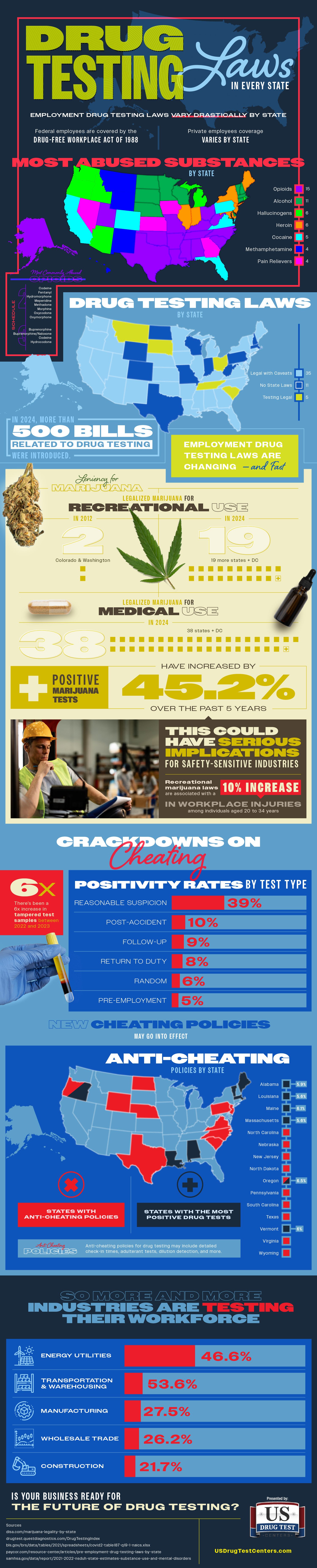
Especially in recent years, drug use has become more common as new legislation has emerged in several states regarding the topic. Especially in relation to the legalization of marijuana, many states are beginning to become more lenient on the use of the drug, both recreationally and medically. In fact, as of 2024, 21 states have legalized the recreational use of marijuana, and 38 states and DC have legalized the use of the drug for medical purposes. Although this legislation has proven to be liberating for many, positive marijuana tests have increased by over 45% over the past 5 years. This could lead to serious implications for safety-sensitive industries. In fact, recreational marijuana use laws are associated with a 10% increase in workplace injuries in young individuals.

In order to crack down on this phenomenon, many states are implementing workplace drug testing laws and anti-cheating measures. These new regulations are already being put into effect in several states, and are administered due to reasonable suspicion, post an accident, a return to duty, or even randomly. There are also many anti-cheating tools being put to use to ensure that results are accurate and beneficial. These policies are an example of how our industries are evolving as we grow and as our legislation continues to change over time.

Drug Testing  Laws in Every State
Source: USDrugTestCenters.com

Understanding Your Risk of Contracting an STI

0

Studies have shown that 20% of Americans currently live with a sexually transmitted infection. The risk of contracting such a disease is determined by a variety of factors, such as locality, habits, sexuality, and identity. Some of these factors can be controlled, while others are predetermined, driving forward the importance of mitigating these risks and practicing safe sex.

Different areas of the United States are susceptible to have a higher chance of contracting an STI, specifically syphilis, chlamydia, HIV, and gonorrhea. However, one is most at risk if they live in the southern part of the country or a larger metropolitan area. Habitual factors like having unprotected sex, using ineffective protection, having multiple partners, dealing with substance abuse, or even using dating apps can also play a role. Overall, the greater the unknown in a situation, the higher the risk there is for an STI to be present. One’s ethnicity, income, age, and background can also pose a threat to ensuring safe sex. For example, young people report STIs 48% more often than older people, and women are more likely to suffer from STIs compared to men.

Finally, sexuality has a large part in how one is affected by STIs, as different sexual preferences and dynamics can lead to different challenges. Both the sexual orientation of the participants and the type of sex can heighten or decrease the risk of infection.

While the best way to avoid STIs is abstinence, protection, testing, and proper vaccines and medication are also great ways to ensure safe sex and take control of one’s sexual health.

What Are The Changes of You Getting an STD?
eNationalTesting.com

The Benefits of a Master’s Degree in Software Development

0

Obtaining an MS in software development has never been easier. Especially as work in the field has become more popular in recent years, avenues to launching or pivoting a career are more accessible to many Americans. I just ten months, some master’s programs can equip learners with the skills they need to succeed and find job placements in competitive industries.

Software development is the art and science behind creating and deploying software for a variety of different uses. From the automotive to finance, to medicine, to architecture, and more, there are endless ways that software is used in our everyday lives. Because of this growth, placing more people in relevant roles has become a priority. Participants in related master’s programs can benefit from the leadership of mentors, not teachers, who focus on hands-on learning rather than academia. This way, learners can get used to the rigor of a career in software development and can earn their certificate with the equivalent of multiple years of experience. Graduates of these programs will complete their ten months as mid-level developers, ready to immediately make a difference in their new role. Top companies eagerly anticipate these new hires as they are key to driving forward an already-thriving industry.

How to Become a Software Developer in 10 Months
Source: YU Global

The Best Way to Simplify Your Business Insurance Audits

0

In the world of insurance, commercial insurance ranks as some of the most intricate and complicated. Once you finally get it completed, you have annual renewals and audits to accompany them, which can throw your company into disarray. Moreover, premium insurance auditing is pivotal in determining how much the insurance is going to be for the coming year, putting even more pressure on these business owners. So, what kind of documents can you expect to provide for these audits?

Primarily, insurance companies want to see the income a business generates. This means that both federal and state tax records help find gross sales, corporate returns, and income statements. Then, they are interested in liabilities, which are expressed in a few ways. They want to see the amount spent on employees and subcontractors, which can be shown via payroll and cash receipts. Lastly, they might want to see what other insurance you have to get an idea of how much they might have to cover. This means you’ll have to present certificates of insurance for general liability, workers’ comp, and the accompanying limits of coverage..

Fortunately, to simplify this process, some companies help with compiling all this documentation for you and serve as a primary contact for your insurance auditor. On top of that, they even analyze to see if your business is eligible for any deductions or exemptions to get the best rate on your insurance. 

Insurance Premium Auditing